6-Day Arctic Winter Survival Course Swedish Lapland
Winter survival & bushcraft training in the Arctic wilderness of northern Sweden
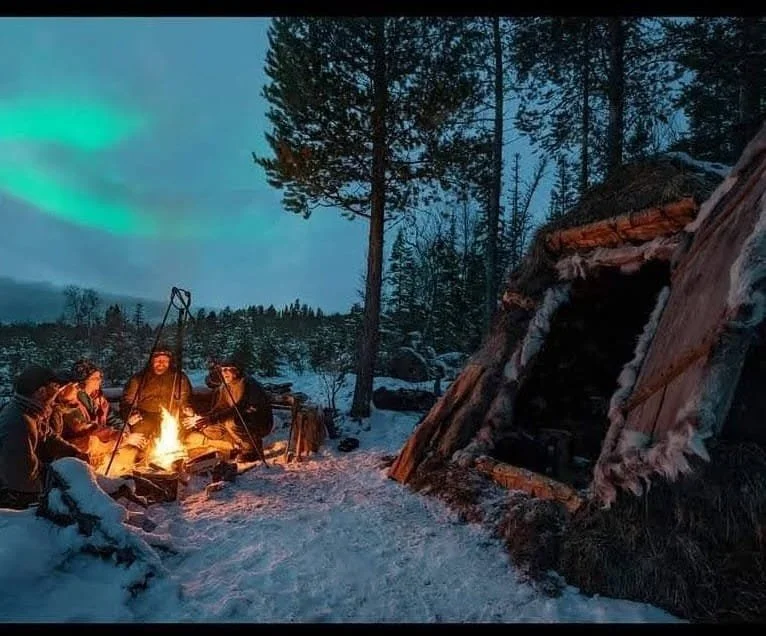
Learn arctic bushcraft, Sámi skills, dog sledging, ice fishing & reindeer butchering
UPCOMING TRAINING
-
LOCATION
Swedish Lapland, Norrbotten
Varaktighet
6 days / 5 nights
Season
Late January to April
Pris
Adult (from 15 y/o): 19200 sek/pers
Group size
Minimum 3 / maximum 8 participants
Winter Changes Everything
This 6-day Arctic winter survival course takes you deep into Swedish Lapland to learn how to function in one of Europe’s most demanding natural environments.
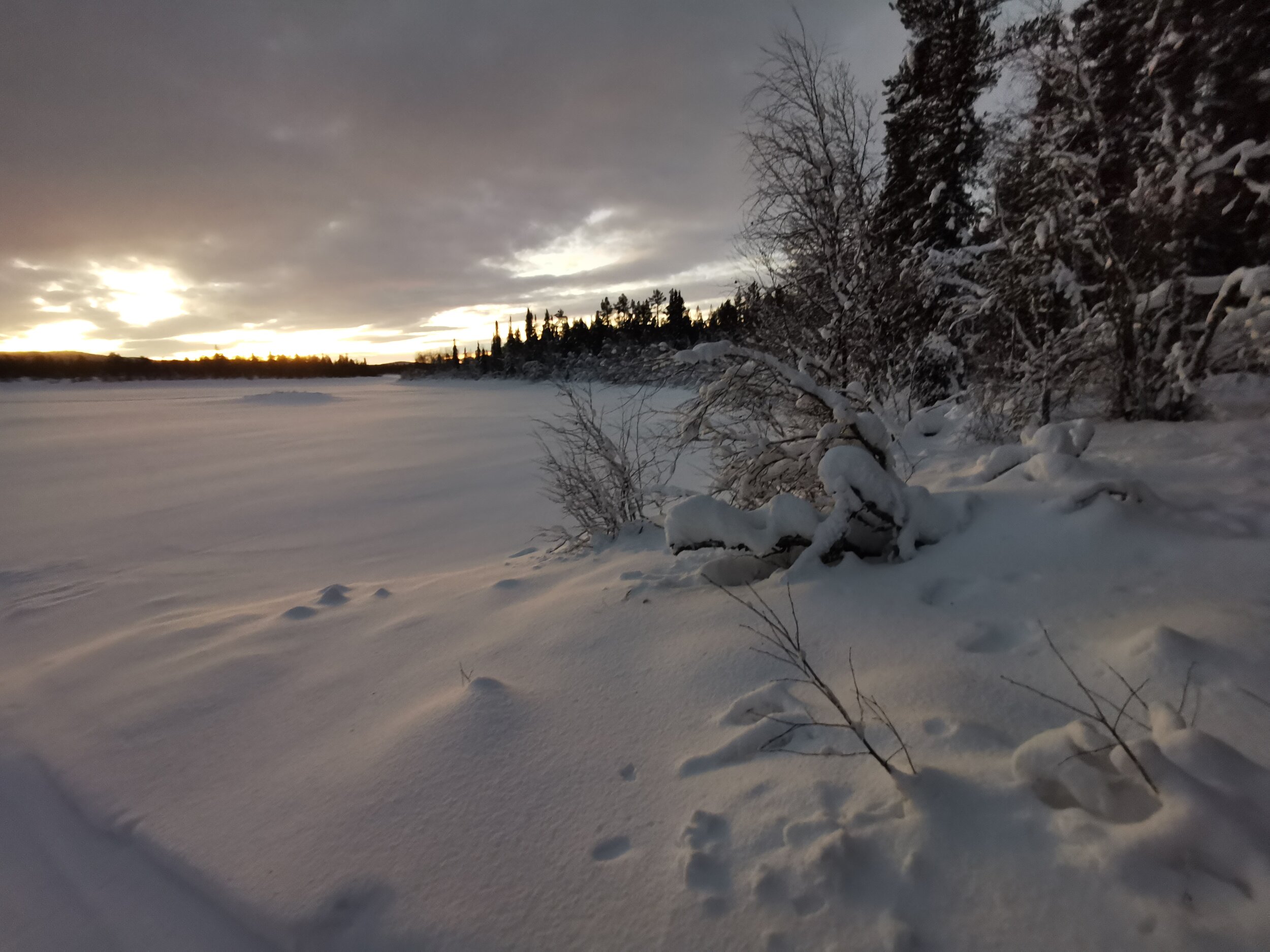
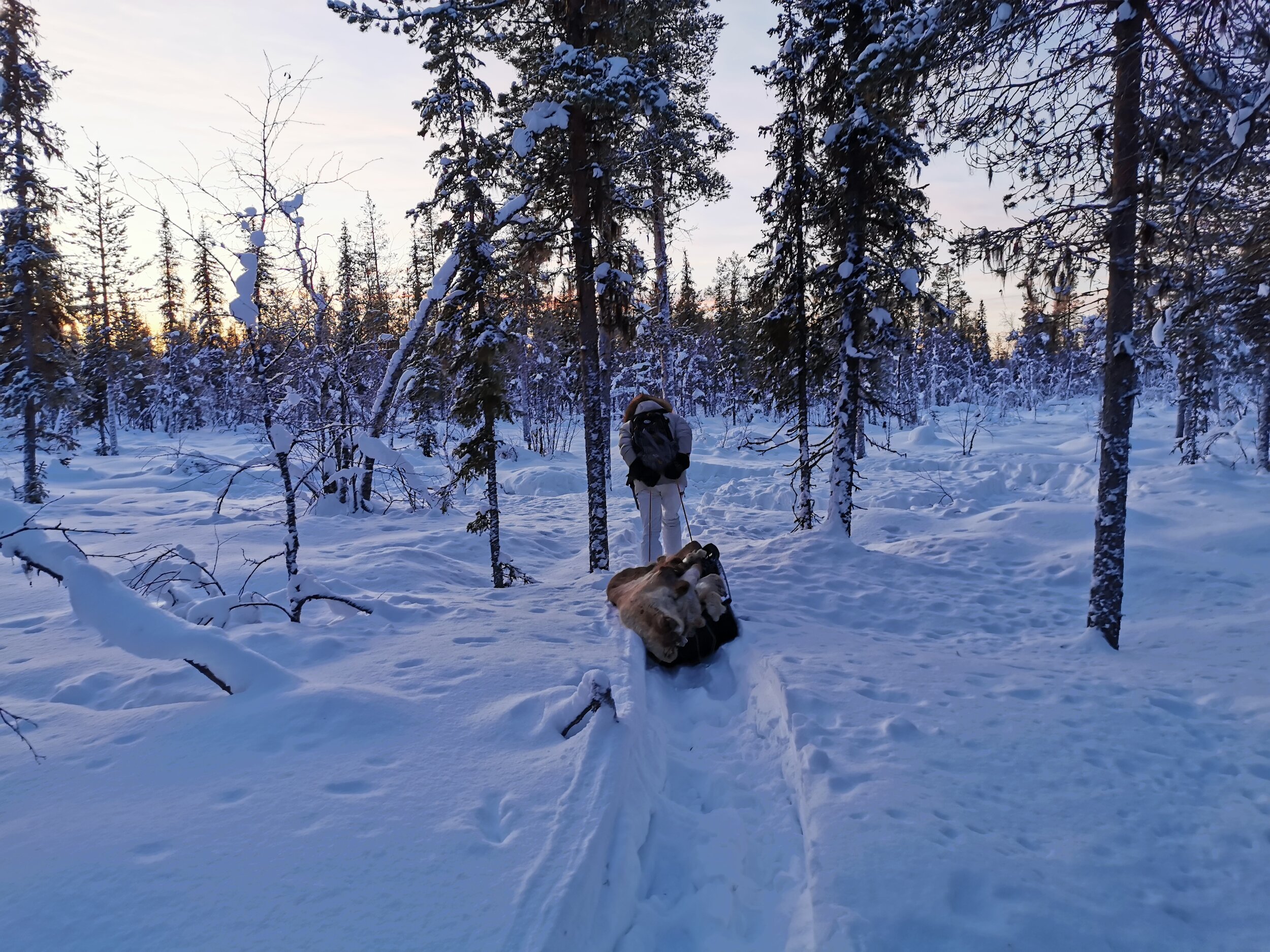
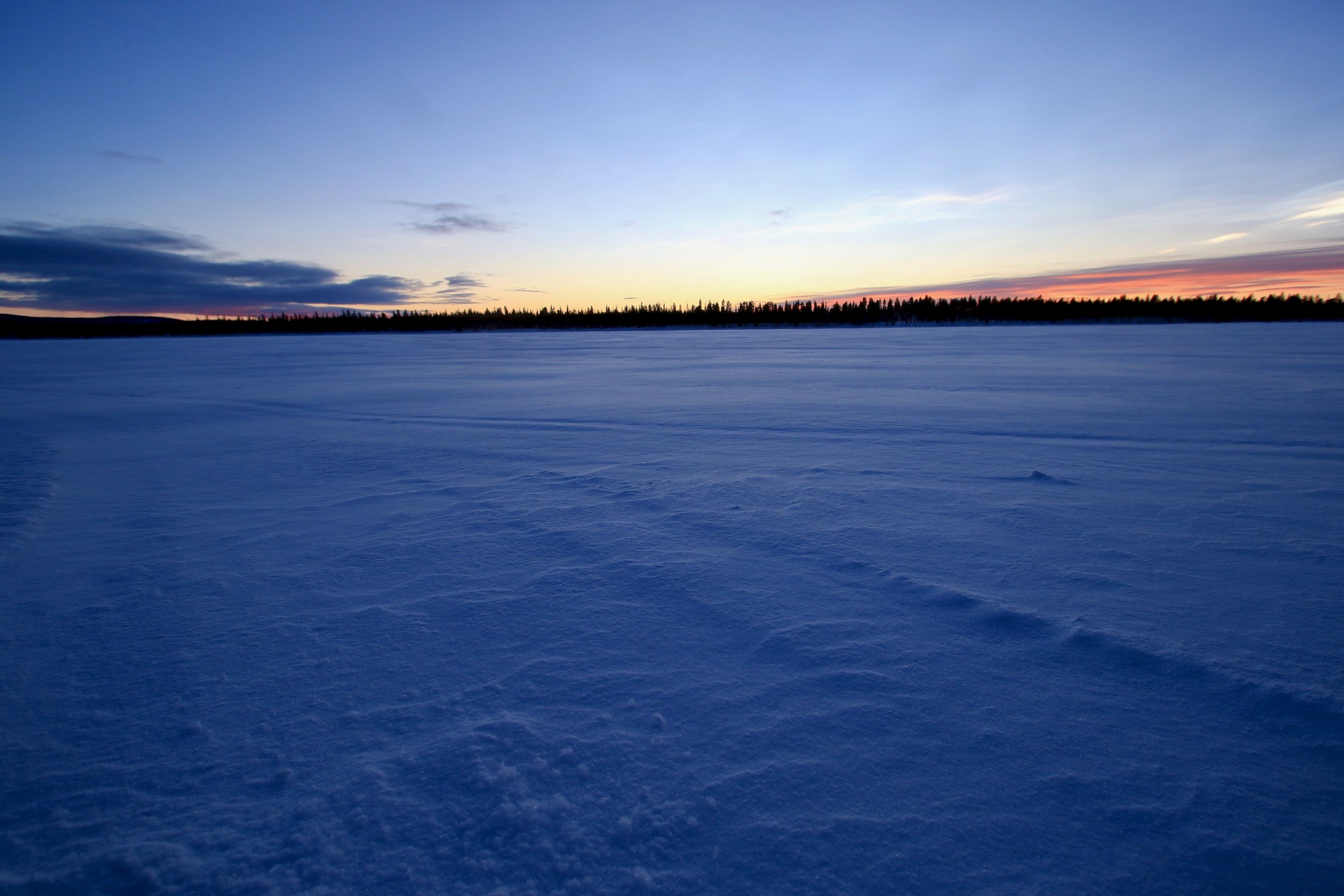
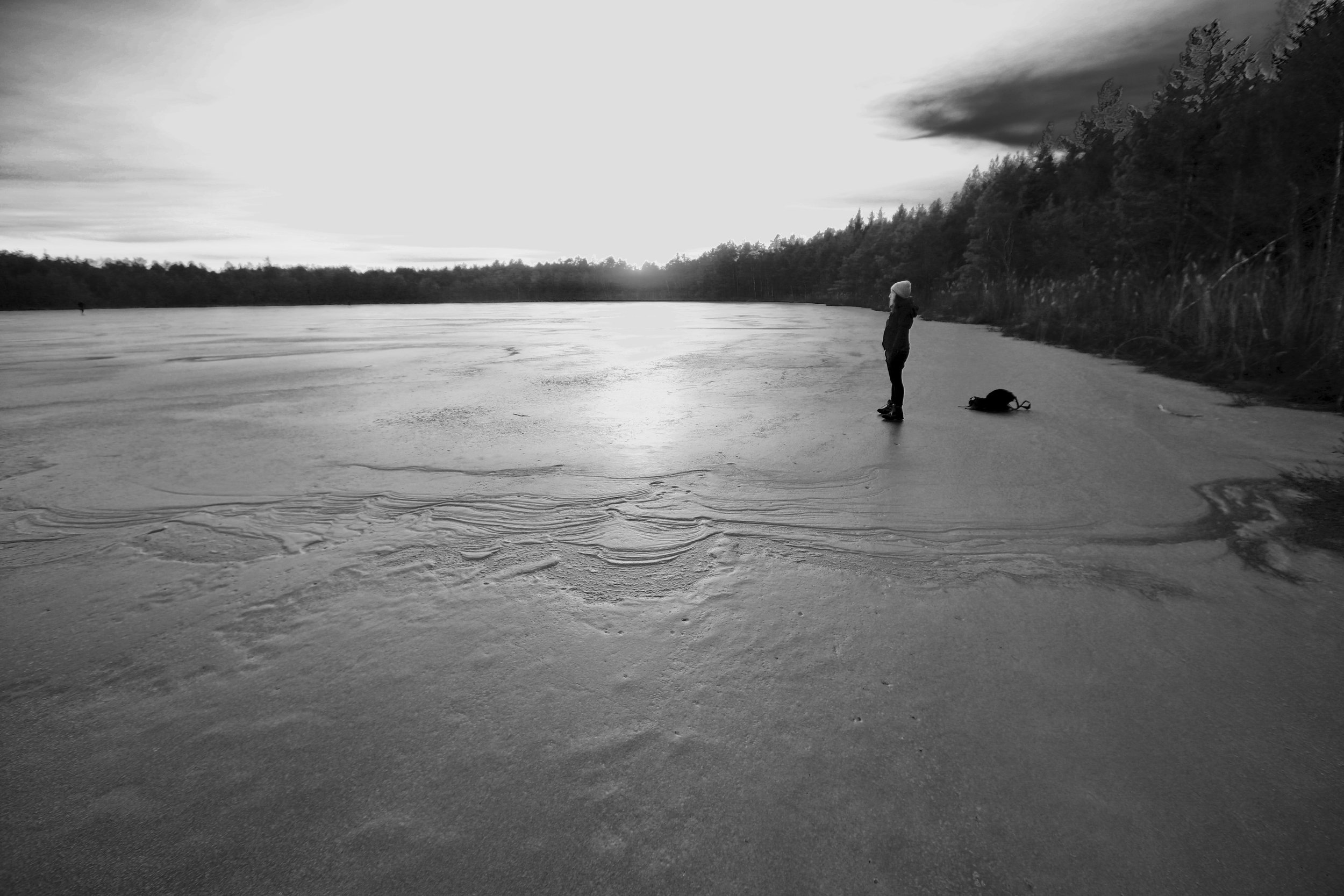
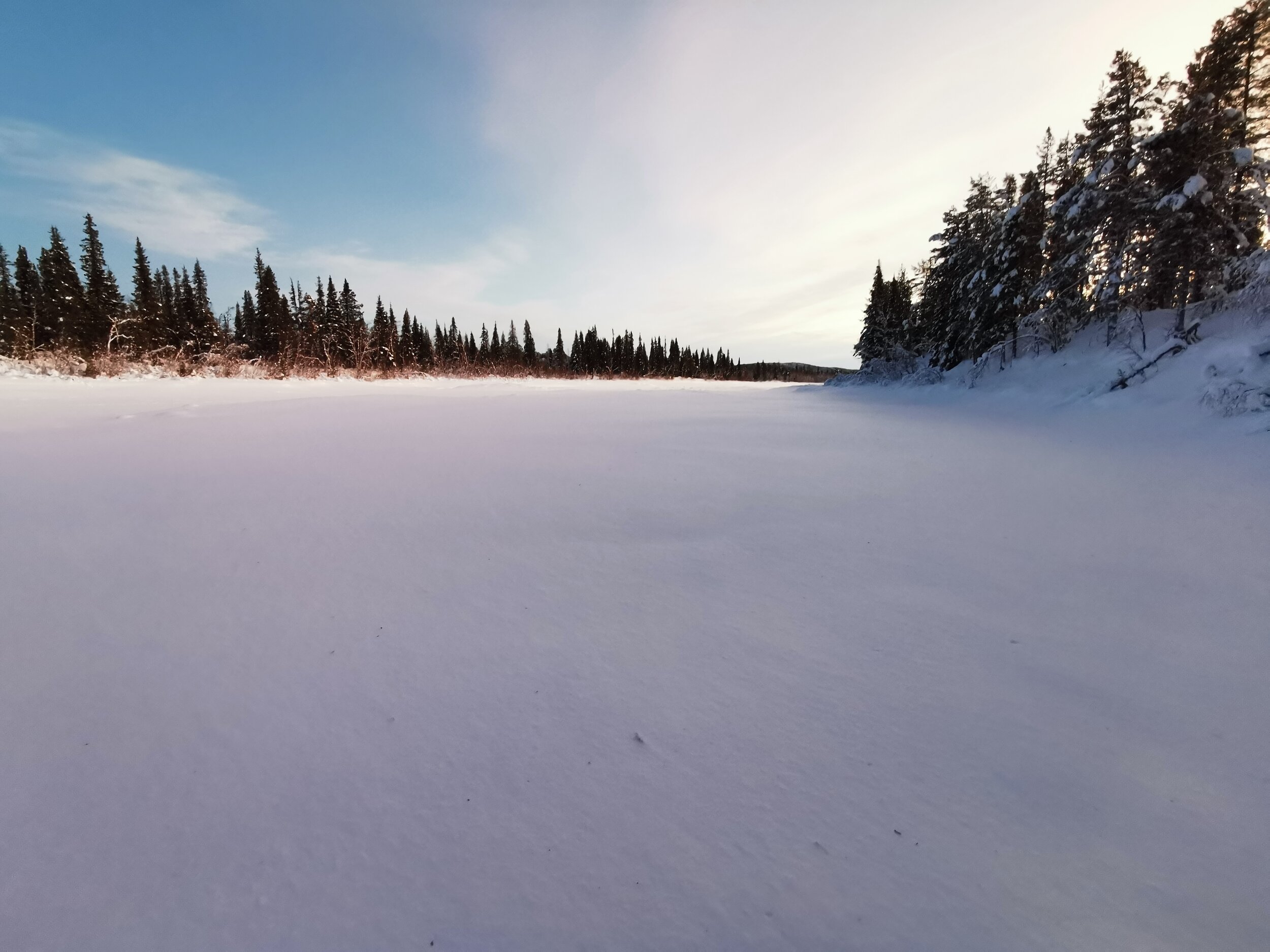
Cold, deep snow, frozen lakes and limited daylight transform even basic survival tasks. Making fire becomes essential. Water is locked beneath the ice. Moving a few kilometres can take hours. Shelter means learning to use the snow itself.
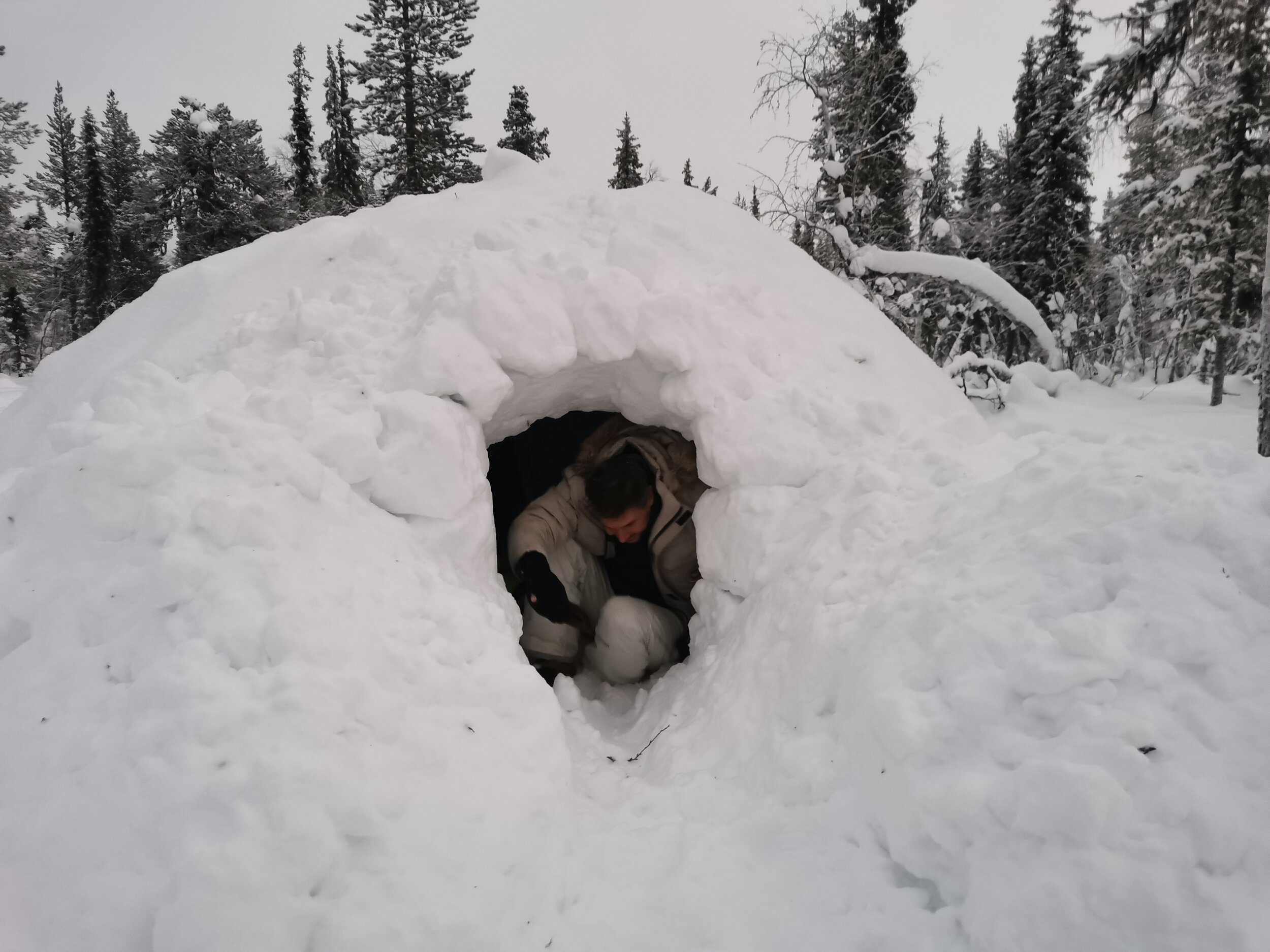
Over six days, you learn the fundamentals of winter survival and bushcraft through theory, demonstration and constant hands-on practice. You make fire in deep winter, build and sleep in your own igloo-style quinzee, access water through frozen lakes, practise primitive ice fishing and trapping, craft traditional snowshoes, navigate with map and compass, read snow and ice — and much more.
The course is built as a progression. Every new skill is immediately practised and then becomes part of everyday life. The fire you learn to make keeps you warm beside the shelter you built. The water you access through the ice becomes your water supply. Food skills allow you to cook at your own winter camp. Navigation gives you the confidence to move farther into the surrounding wilderness and find your way back.
No previous survival experience is required. The course is based around a remote, wood-heated log cabin that remains available throughout as a warm and safe backup.
The conditions are real. The training is demanding. But the objective is not unnecessary risk — it is learning how to function confidently and independently in an Arctic winter environment.
6 days in Lapland’s wild north: A survival course in Sweden like no other
Life & Training in the Arctic
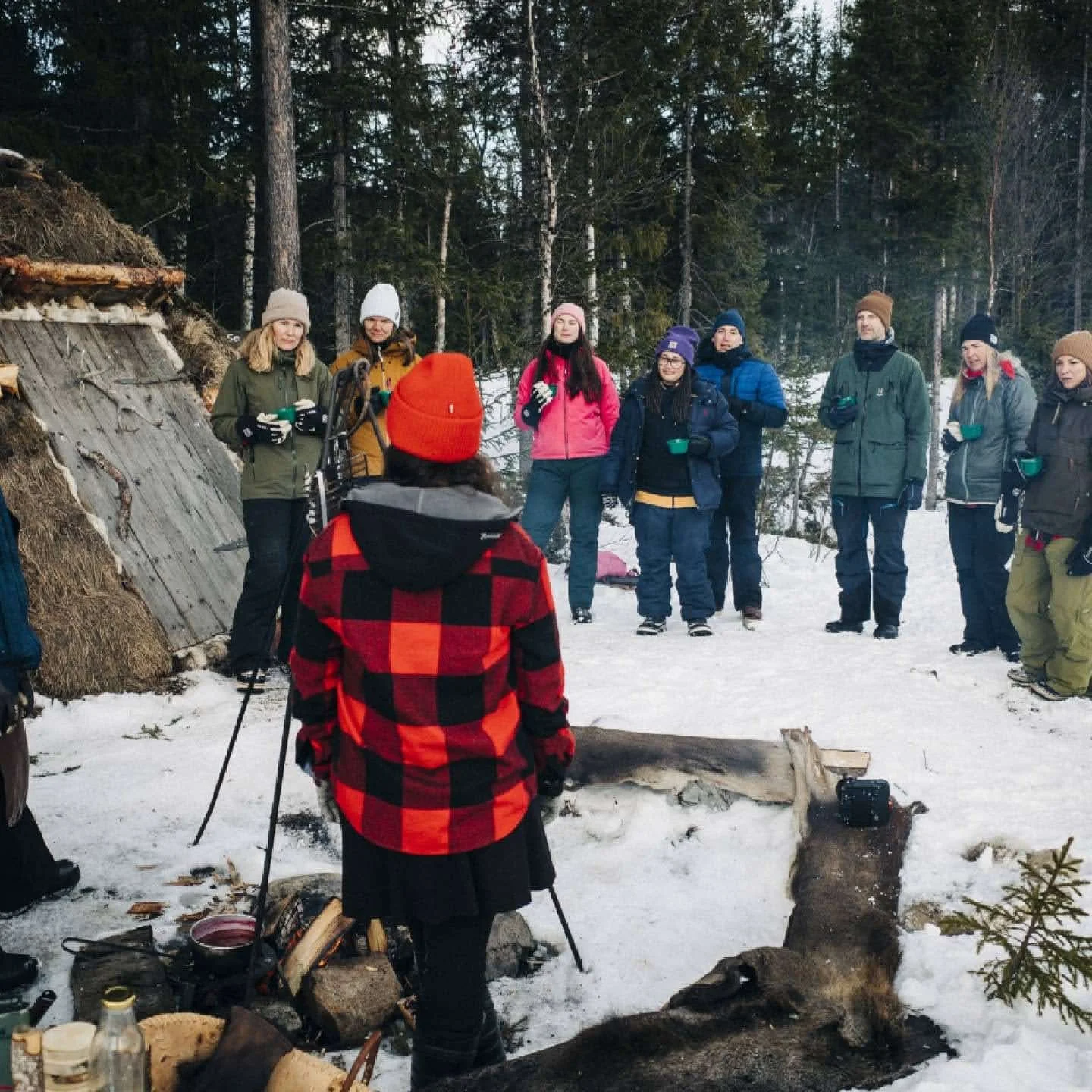
Throughout the six days, you are accompanied by an experienced survival instructor who explains, demonstrates and supervises each part of the course. With a maximum of eight participants, there is time to practise, ask questions, learn from mistakes and develop confidence through your own experience.
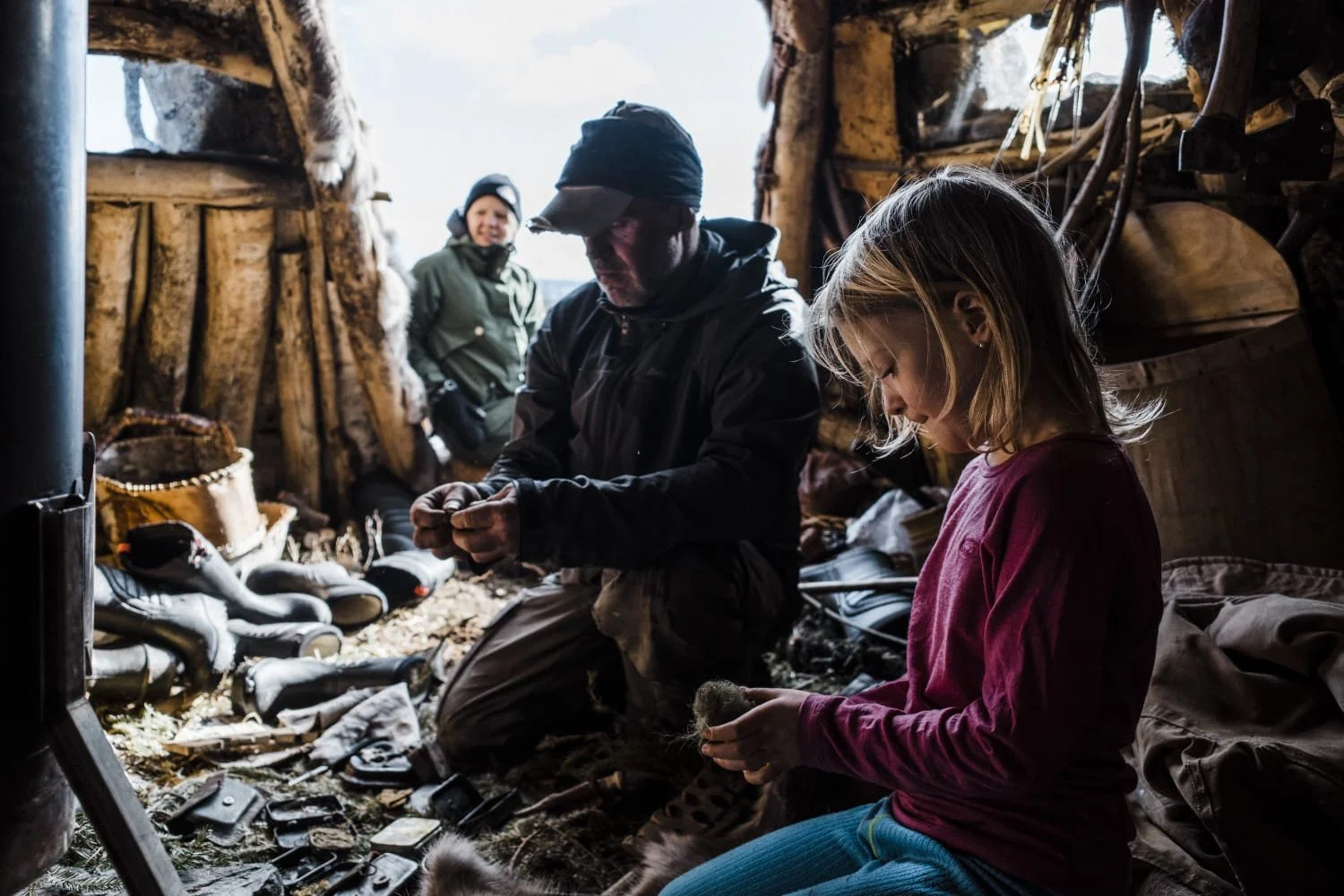
Your base is a remote wood-heated log cabin surrounded by the winter wilderness of Swedish Lapland. It provides a warm place to recover, dry equipment and sleep when needed, but as your quinzee takes shape, life increasingly moves outside.
Your snow shelter becomes your personal base. You maintain your fire, organise your equipment, collect water and prepare food using the skills you develop throughout the course. Once your quinzee is ready, you are encouraged to spend as many nights as possible sleeping in it.
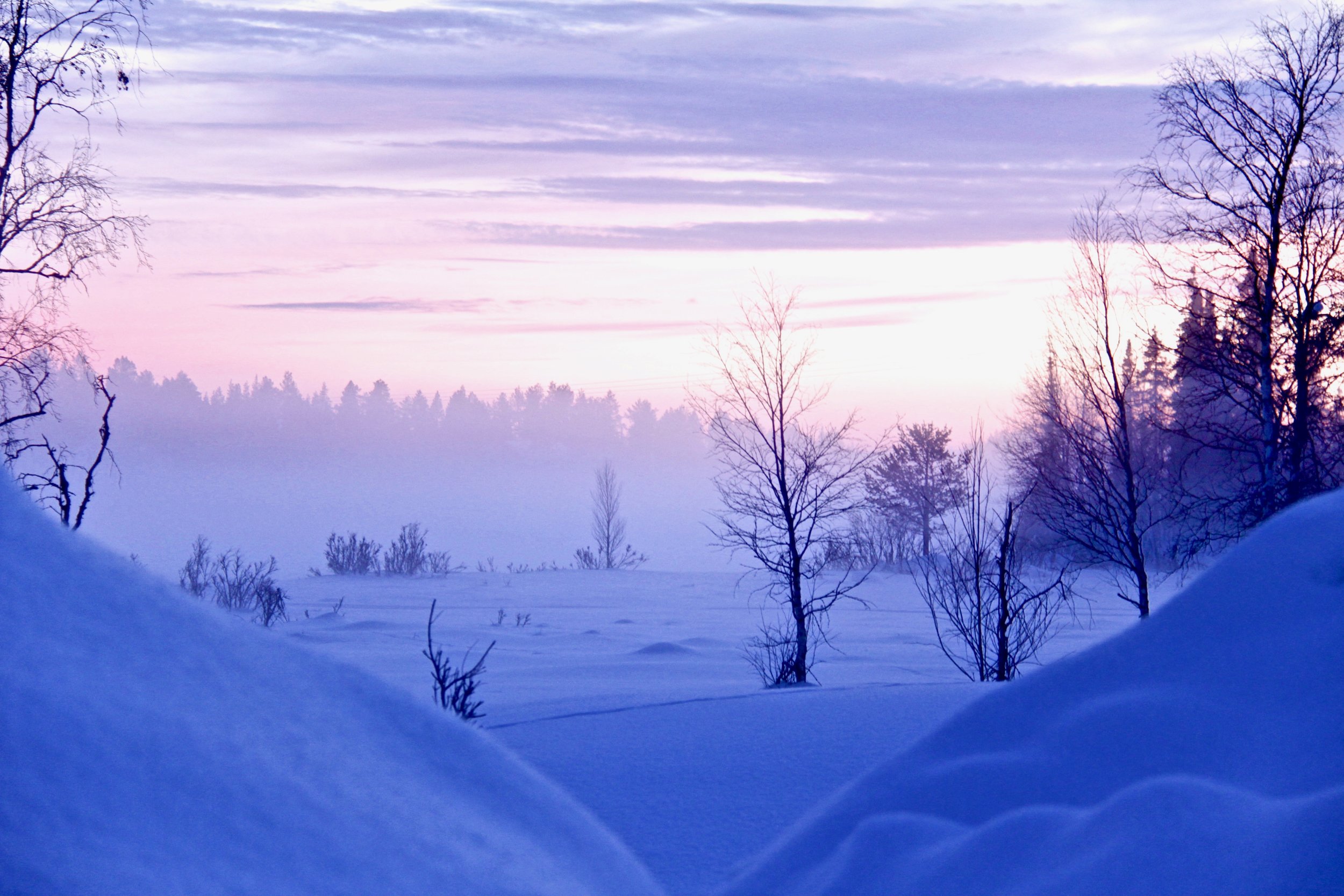
Winter also provides much of the challenge. Deep snow makes movement exhausting, cold slows down even simple tasks, and darkness, fatigue and isolation can affect concentration, motivation and decision-making. Learning to recognise and manage these effects is an important part of winter survival.
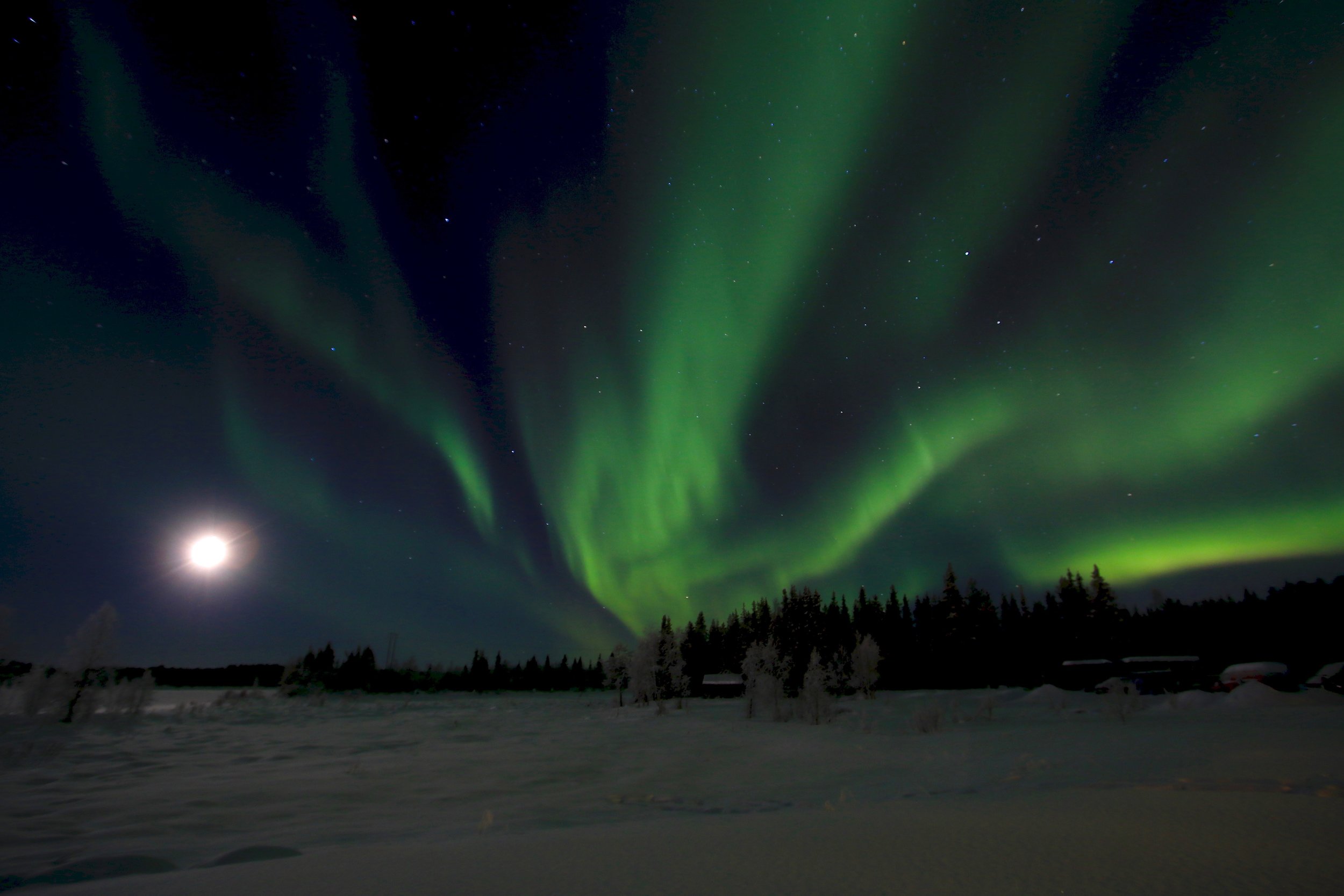
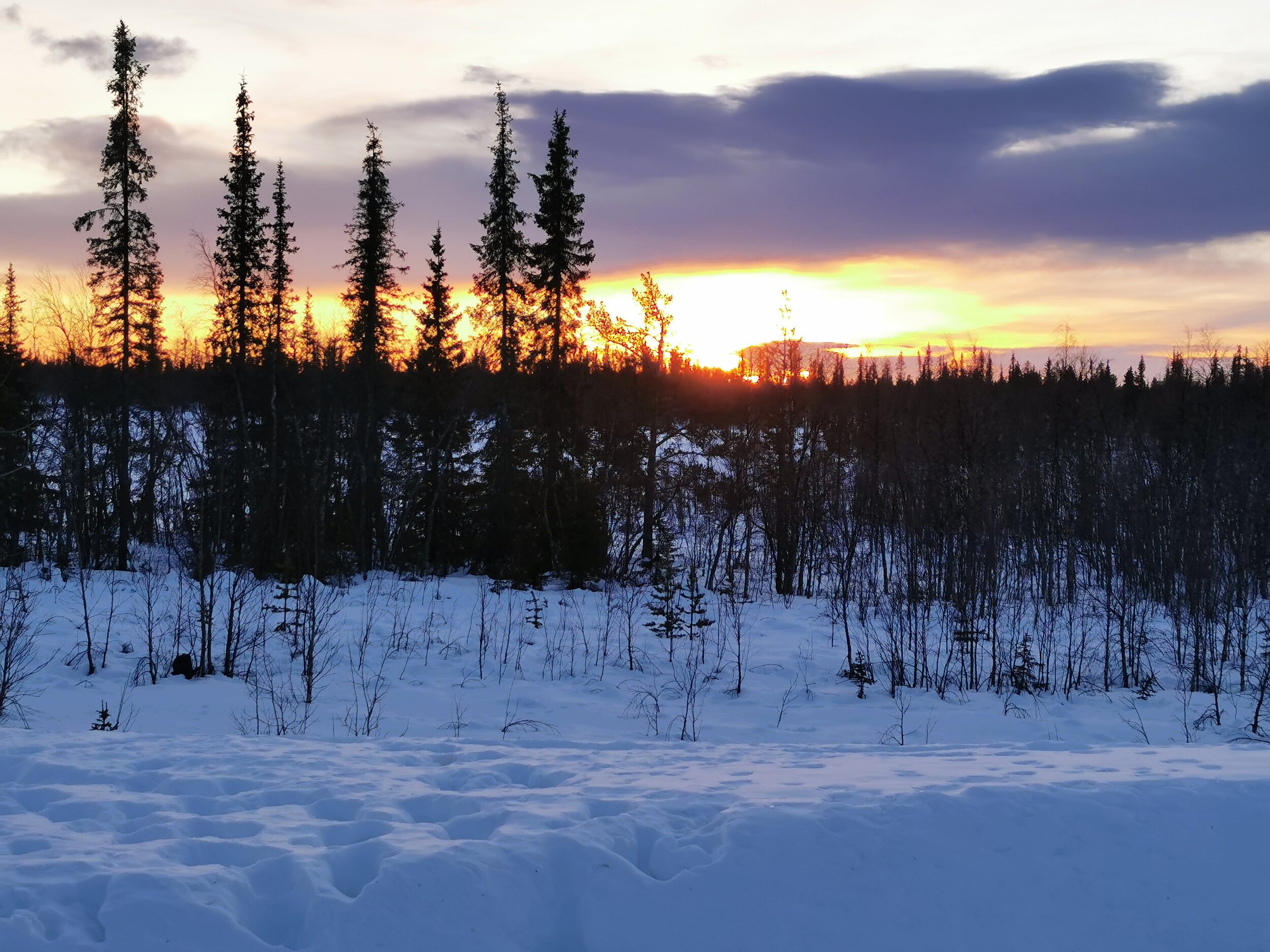
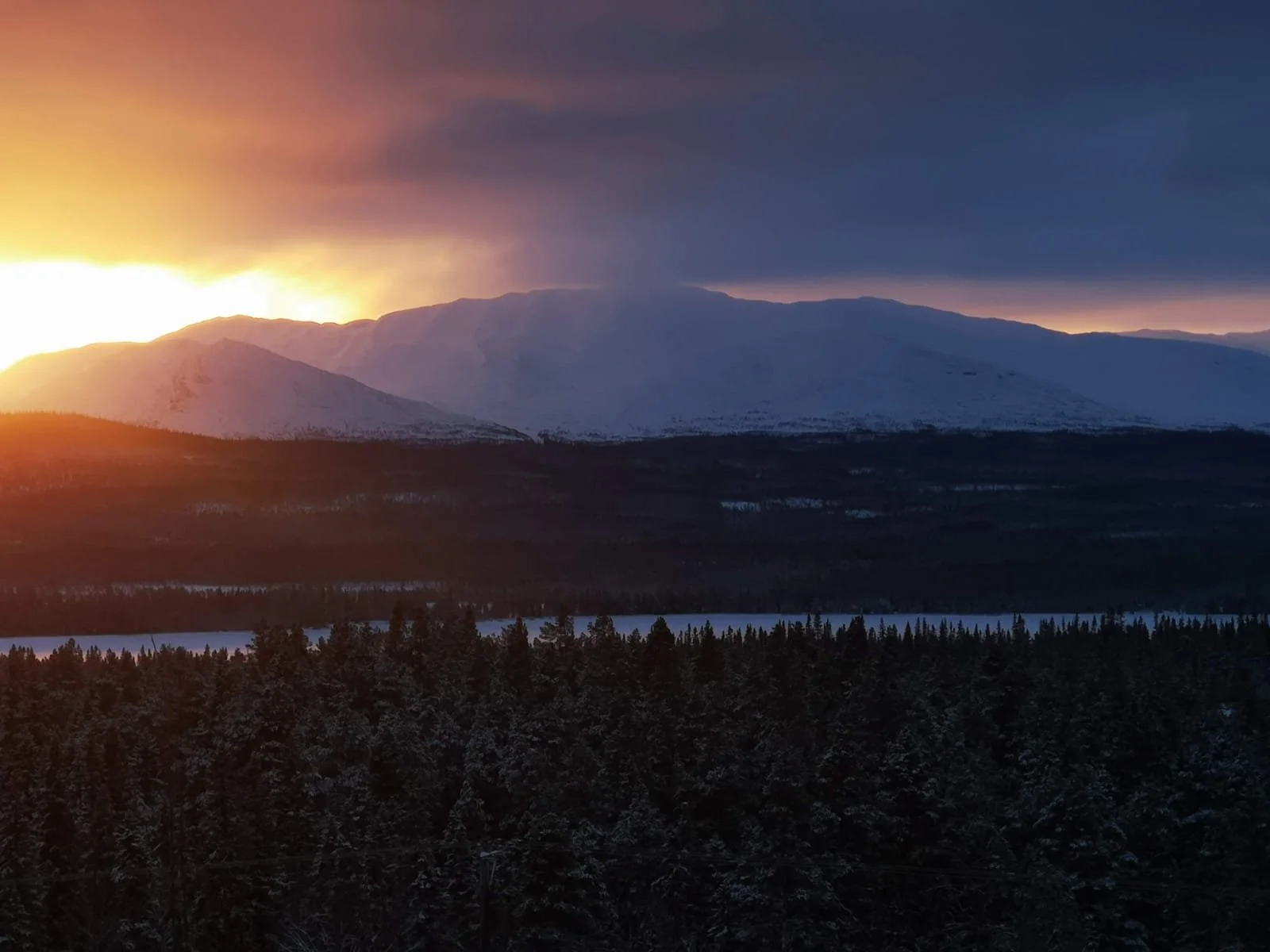
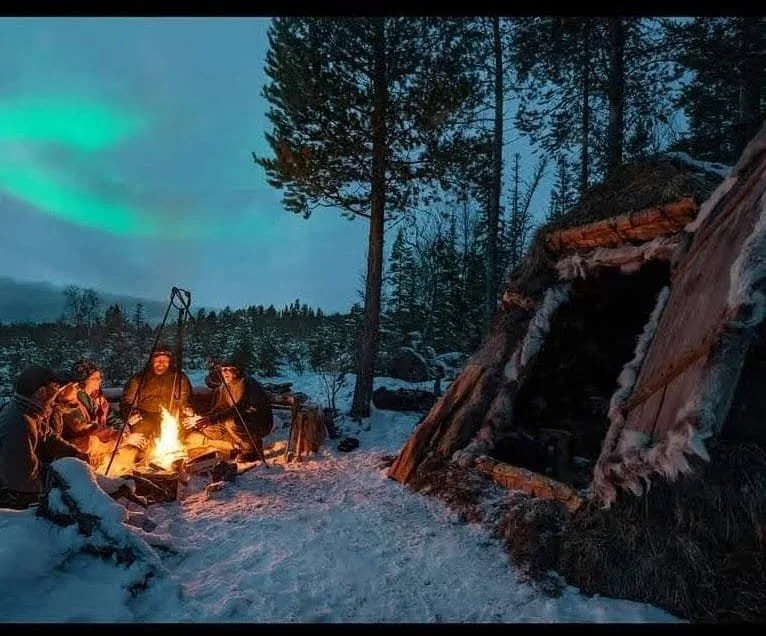
Away from towns and artificial light, you experience the silence and darkness of the Arctic winter. On clear nights, you may also have the chance to see the Northern Lights directly from camp. They can never be guaranteed, but you will be spending six days in one of the world's great aurora regions.
Explore Our Other Survival Courses
Looking for a different kind of survival experience?
Our 2-Day Bushcraft & Survival Course near Stockholm is the best introduction to the fundamentals of fire, shelter, water, food and wilderness skills.
For a longer immersion in the Swedish wilderness, the 5-Day Survival & Bushcraft Course gives you more time to practise, build your own natural shelter and develop greater independence in the field.
For our most demanding long-term survival experience, the 14-Day Cast Away Survival Course combines six days of advanced training with an eight-day solo survival challenge.
-
Experience required: None
Accommodation: Remote wood-heated log cabin + your own quinzee snow shelter
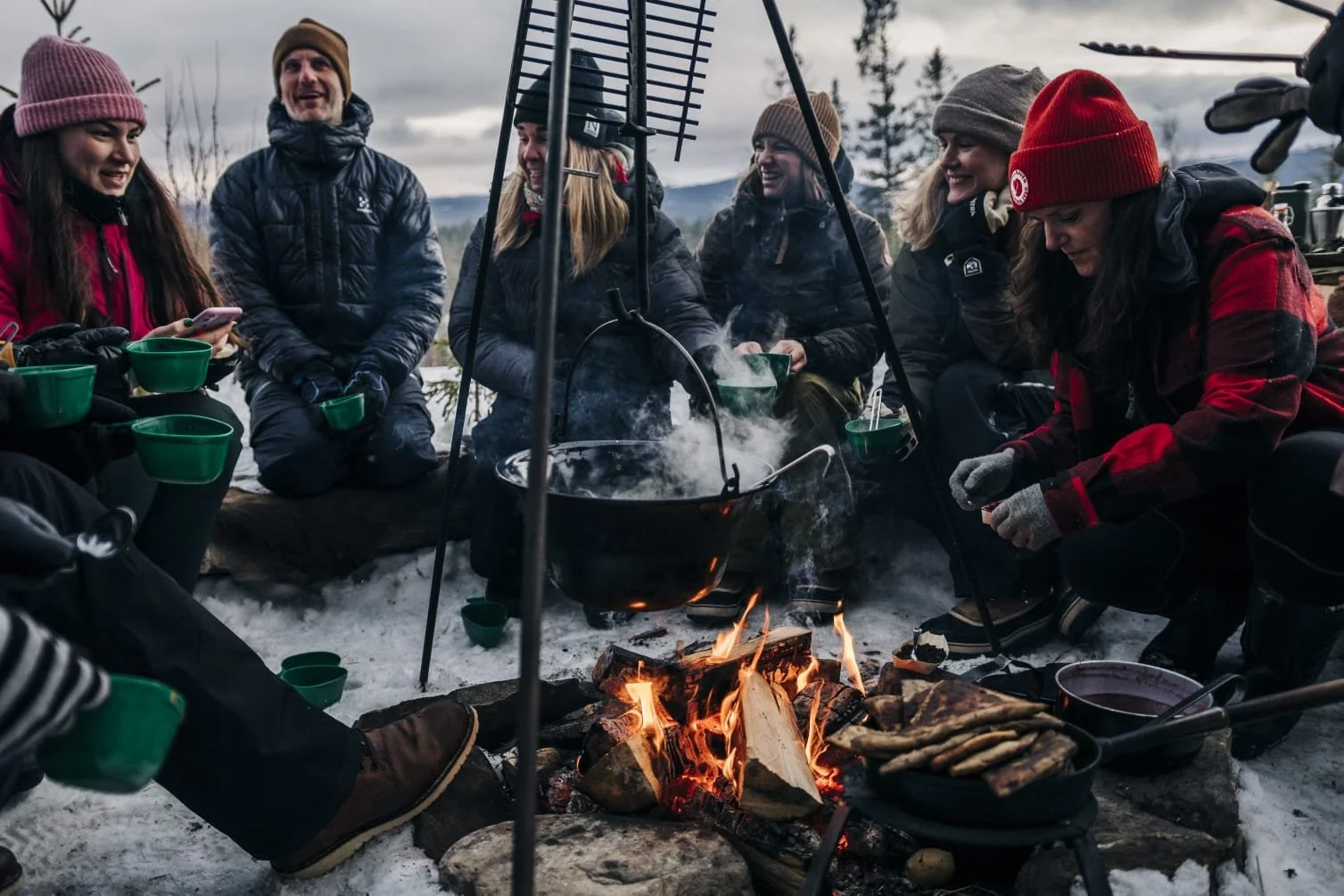
Meals: All meals included, prepared over fire as part of the course
Transport: Pickup and return transfer in the Kiruna area included; exact meeting point arranged before departure
Course equipment: All tools and technical equipment provided, including axes, fire equipment, cooking equipment and snowshoes
Personal equipment: Appropriate winter clothing, backpack and daypack required
Equipment rental: Expedition sleeping bag and mat, extreme-cold boots and winter overall available to rent. Backpack available if needed
Conditions: Prepare for temperatures around -25°C; colder conditions are possibleScheduled departures are available throughout the winter season. Private bookings can also be arranged on request, with dates depending on availability.
-
All transportation during the tour.
Alla måltider
Accommodation
Hundspann
All needed gear (except sleeping bag)
Din överlevnadsinstruktör
Camping Gear
Backpack
-
Reseförsäkring
Resa till och från Sverige
Drinks other than coffee and tea
Winter clothing (we can provide on request)
-
Pickup and return transfer in the Kiruna area; exact meeting point will be arranged before departure.
-
Remote wood-heated log cabin + your own quinzee snow shelter
-
Winter survival is not simply summer survival in colder weather. Snow, ice, darkness and extreme cold change how almost every basic task is approached.
This course is built around progression. Each new skill is first explained and demonstrated, then practised directly in the wilderness. But the learning does not stop when that lesson ends — you continue using those skills as the course develops.
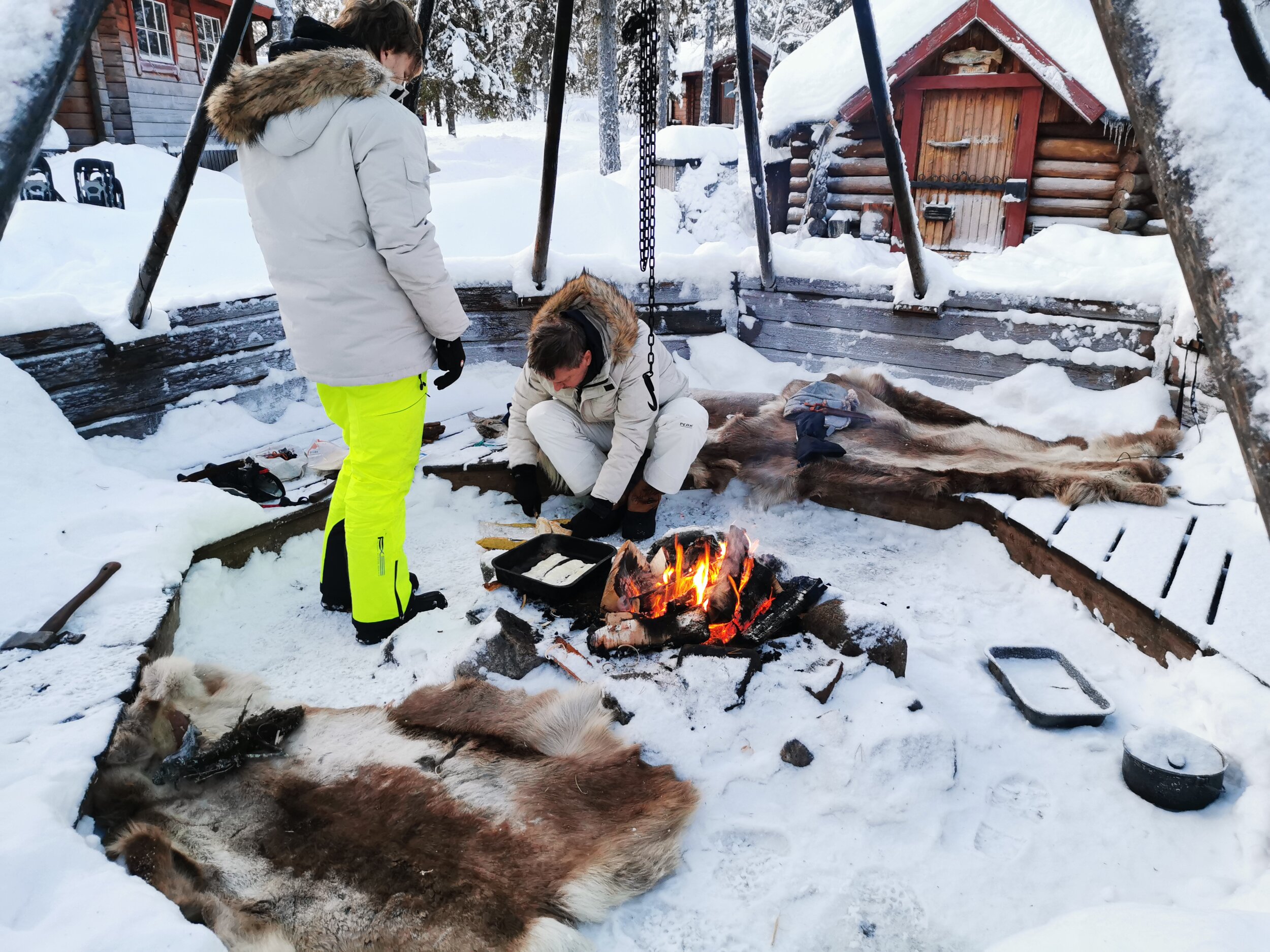
You learn to make fire. Then you build your own quinzee, which becomes your personal winter base. You learn to access water through the frozen lake, find and prepare food, and cook beside your shelter using the fire skills you already developed.
As your navigation and winter terrain skills improve, your world becomes larger. You move farther from camp, navigate through snowy woodland with map and compass, and learn to read the snow, ice and landscape around you.
Skills gradually connect until fire, shelter, water, food and navigation are no longer separate exercises. They become a functioning system.
This is what makes the six days valuable: you do not simply learn winter survival techniques. You have time to use them, repeat them and begin living from them.
-
This 6-day winter survival course covers the core principles of survival and bushcraft, adapted specifically to Arctic winter conditions.
Every subject combines theory, demonstration and hands-on practice. As the course progresses, previously learned skills are used again and combined with new ones.
Survival Fundamentals & Winter Psychology
You begin with the four survival fundamentals and the survival pyramid, learning how priorities change when cold becomes a constant factor.
You work with heat loss, clothing and layering, energy management, winter hazards and the effects of cold, fatigue, darkness and isolation on decision-making and motivation.
Understanding your own physical and mental response to the environment is an essential part of vinteröverlevnad — winter survival.
Firecraft in Deep Winter
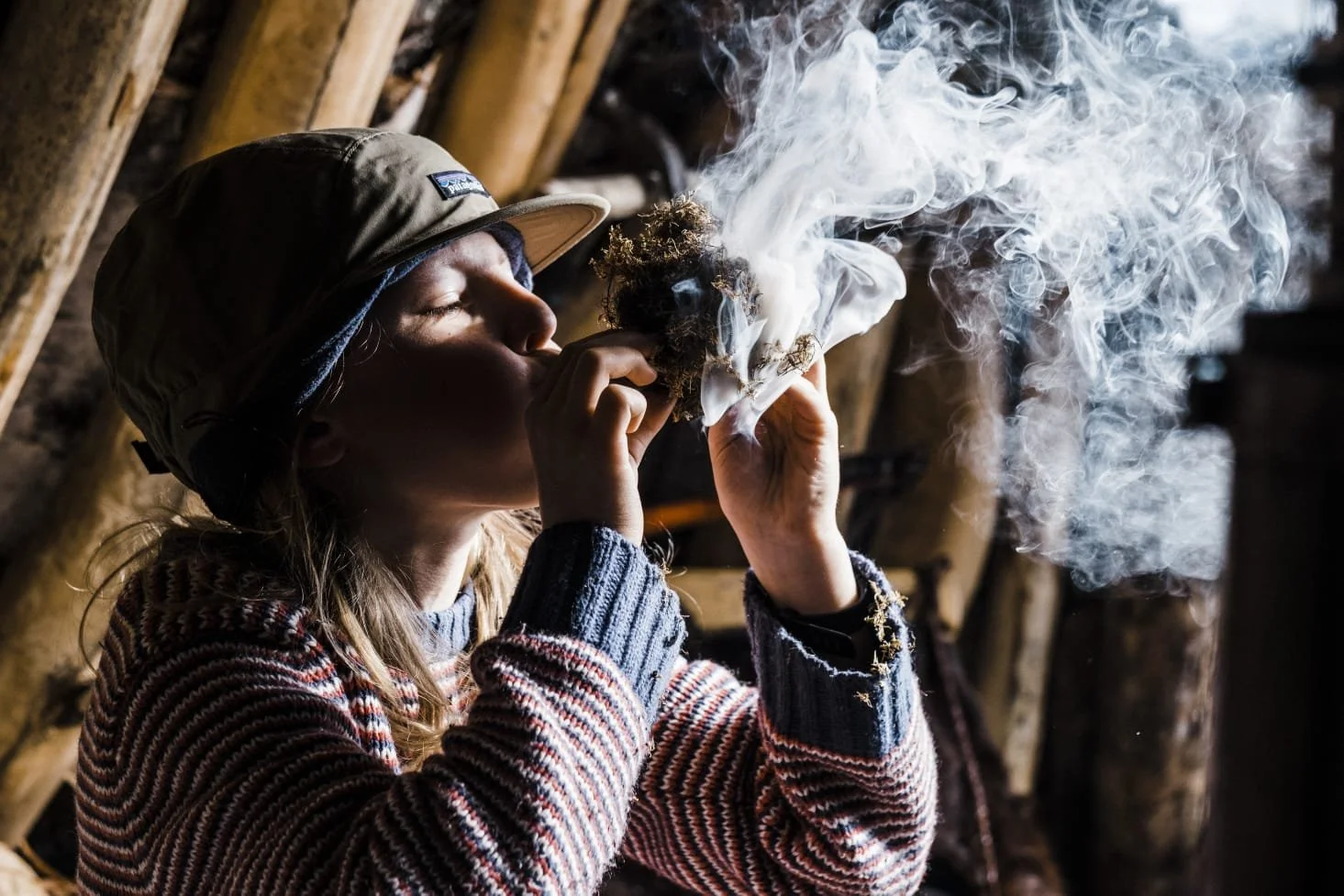
You learn to build and maintain fire using fire steel and natural materials, including birch bark and feather sticks.
Different techniques are practised repeatedly so that fire becomes a reliable skill rather than a one-time exercise. As the course develops, you use fire for warmth, cooking and daily life around your winter base.
Build & Sleep in Your Own Quinzee
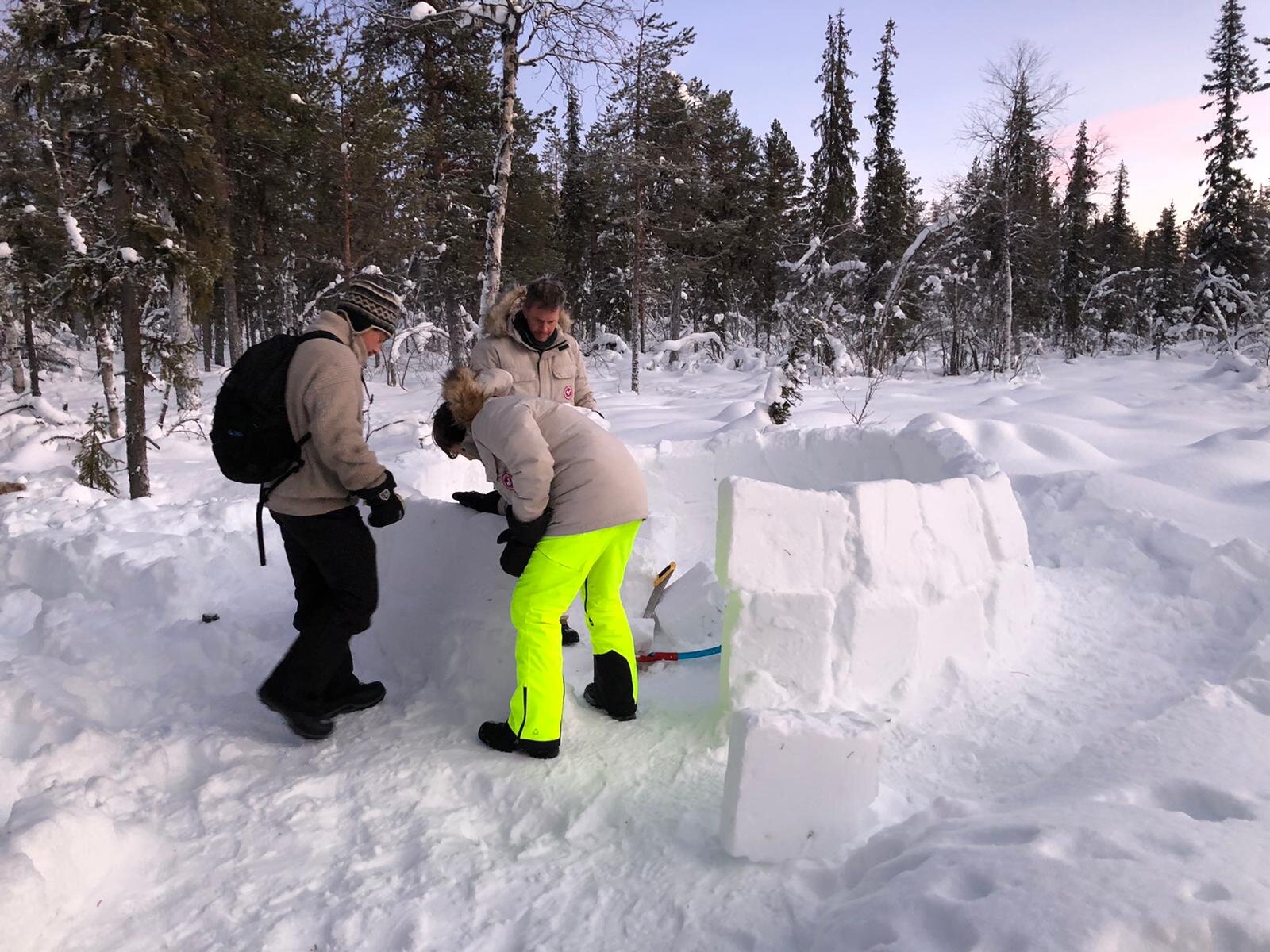
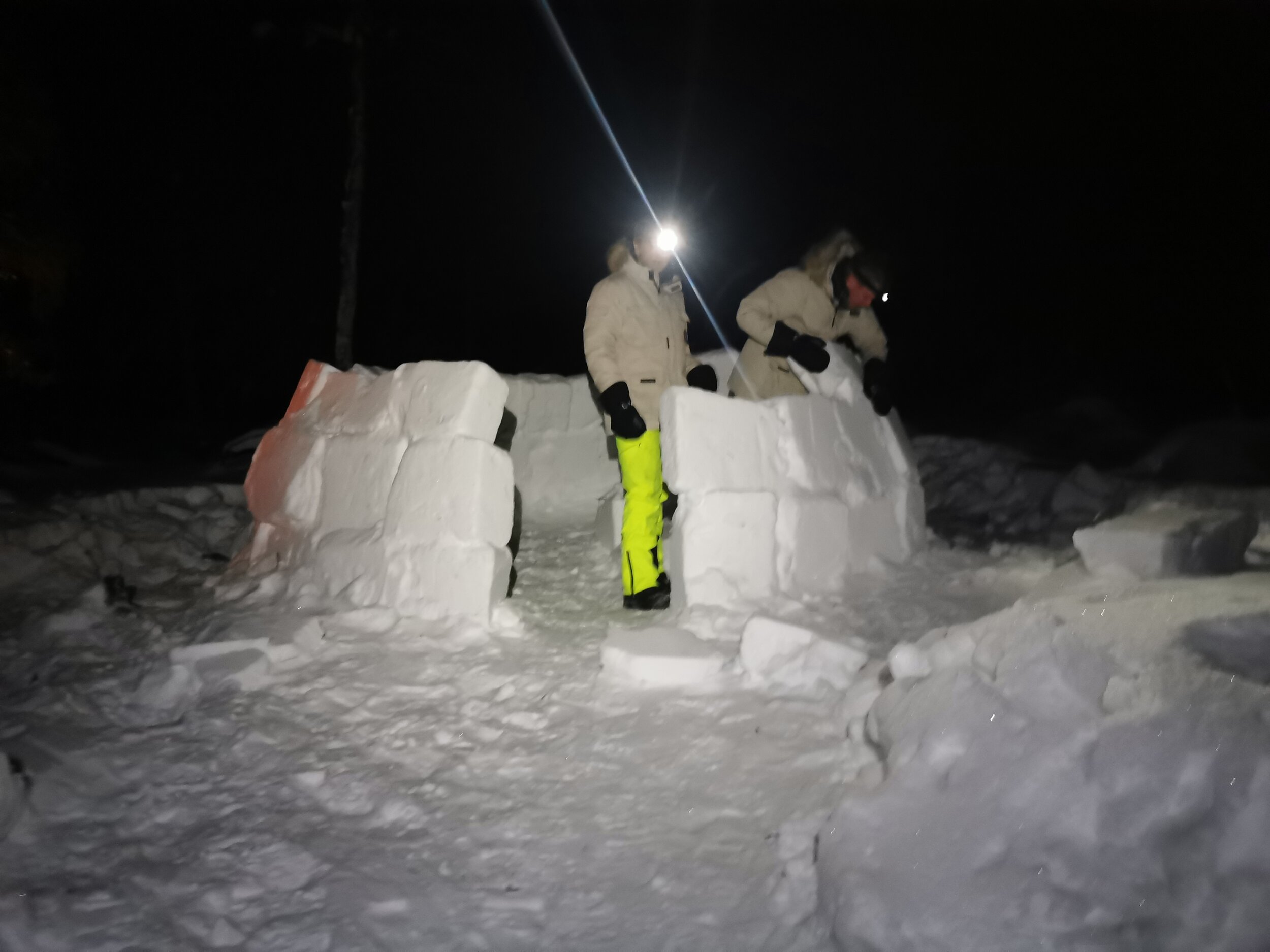
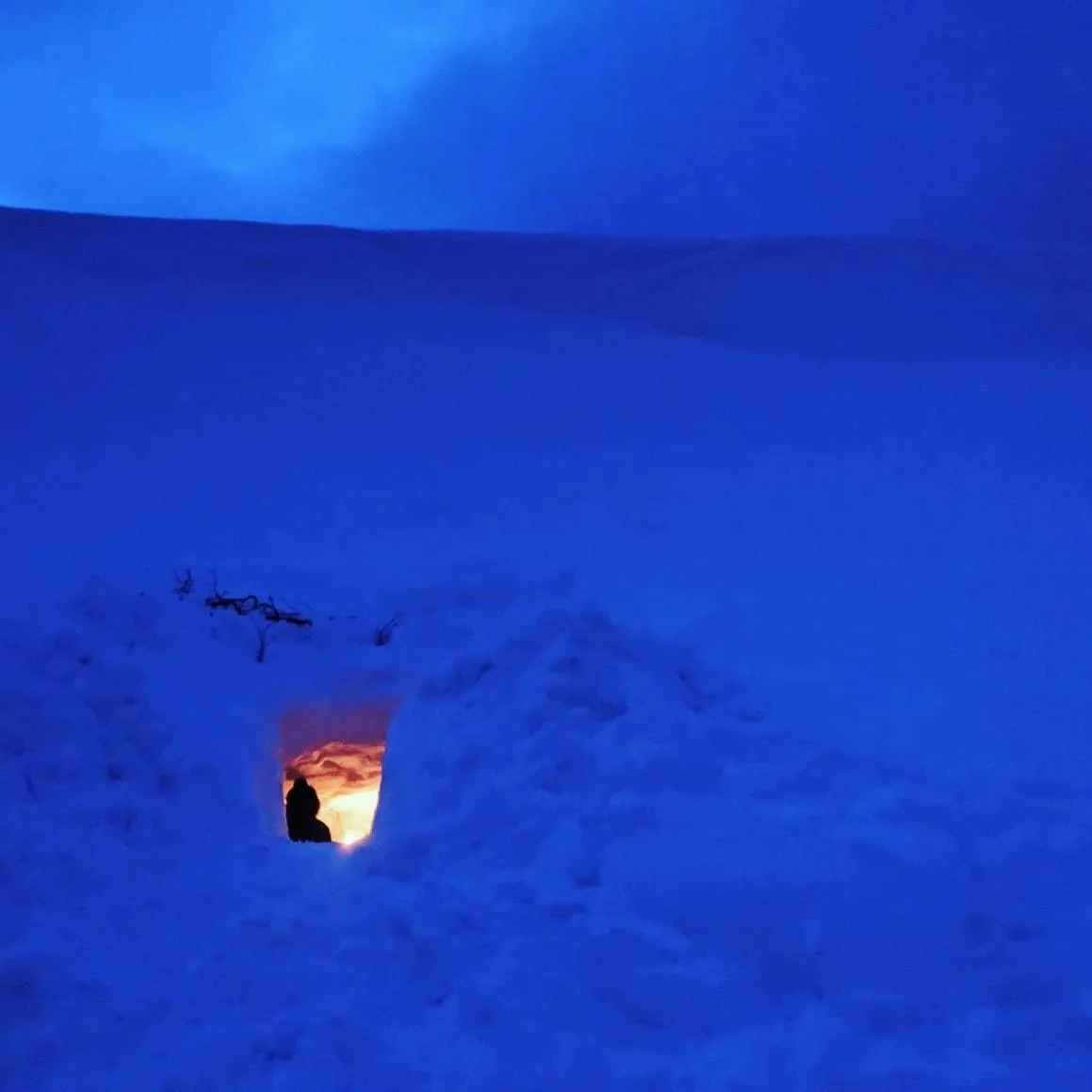
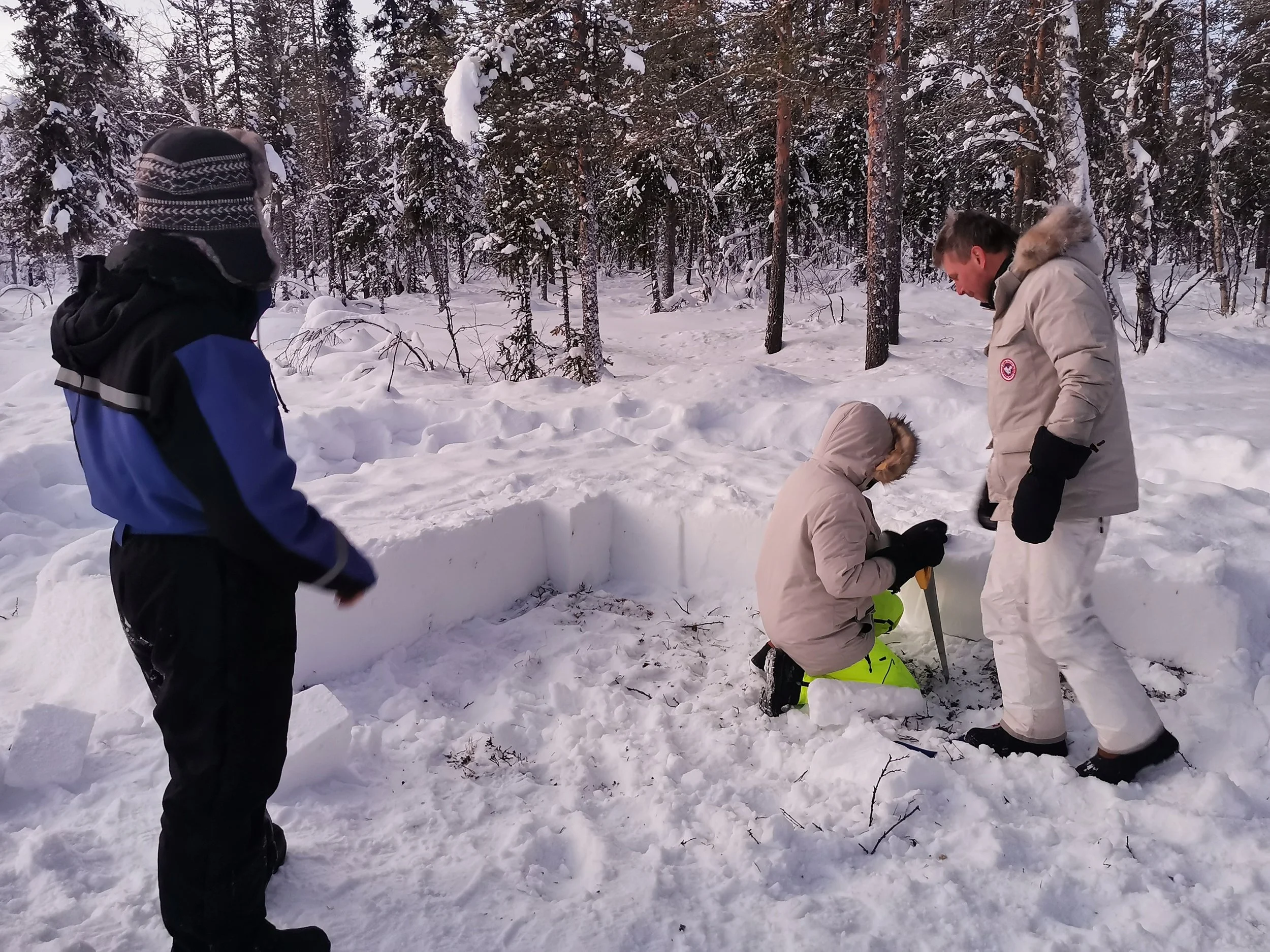
Every participant builds an individual quinzee — an igloo-style snow shelter — and is encouraged to sleep in it once completed.
You learn how to select a location, work with snow as an insulating material, construct the shelter correctly and manage ventilation and sleeping conditions.
You also learn the principles behind traditional igloos and other ways snow can be used to create emergency winter shelter.
Water in a Frozen Landscape
Finding water in Arctic winter requires understanding the frozen environment.
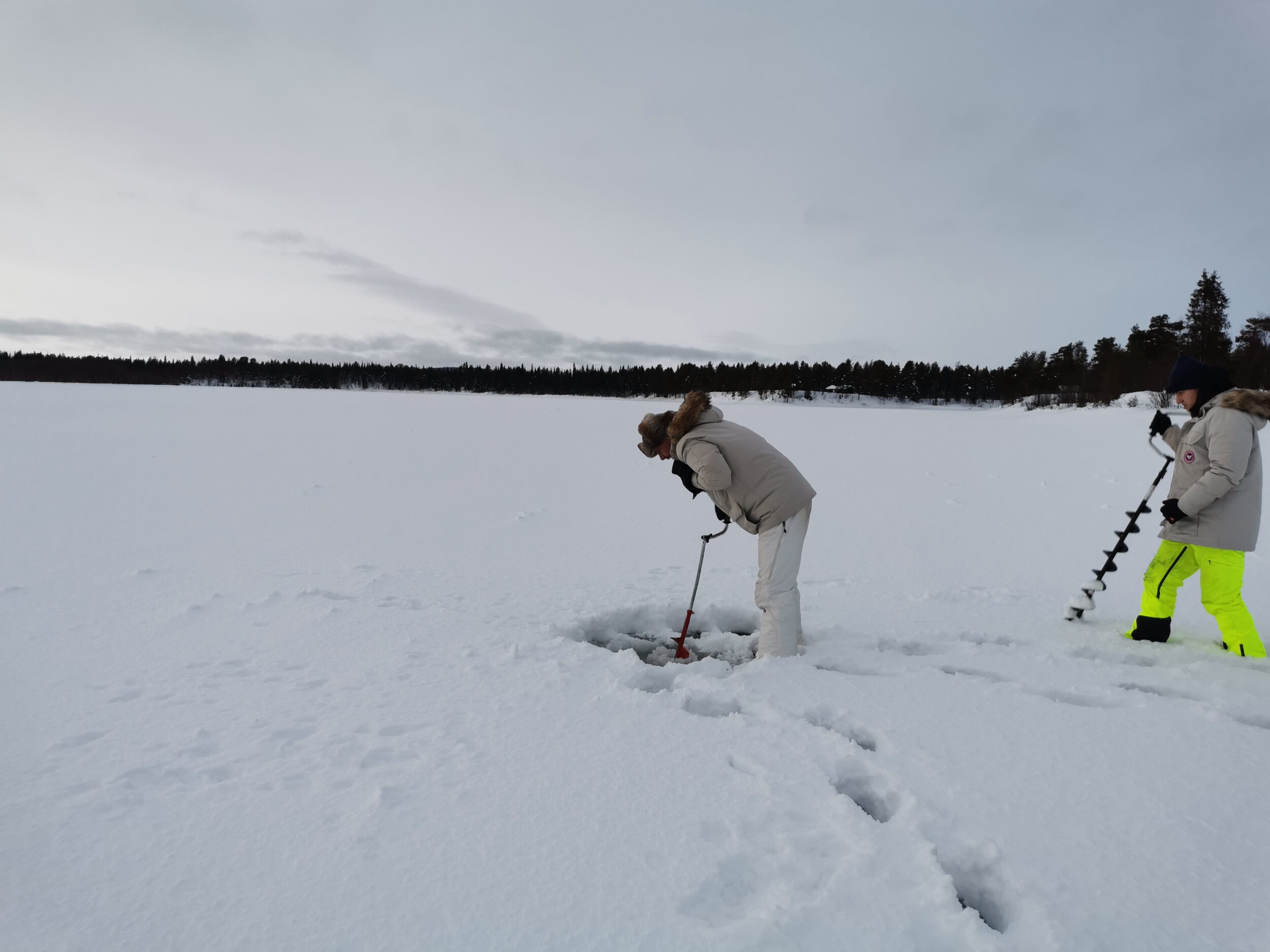
You learn how to access water through lake ice using simple tools, including cutting through the frozen surface and maintaining an opening that can provide water over several days.
You also learn how ice can be collected and melted when appropriate, turning water procurement into a functioning part of camp life.
Primitive Ice Fishing, Trapping & Winter Food
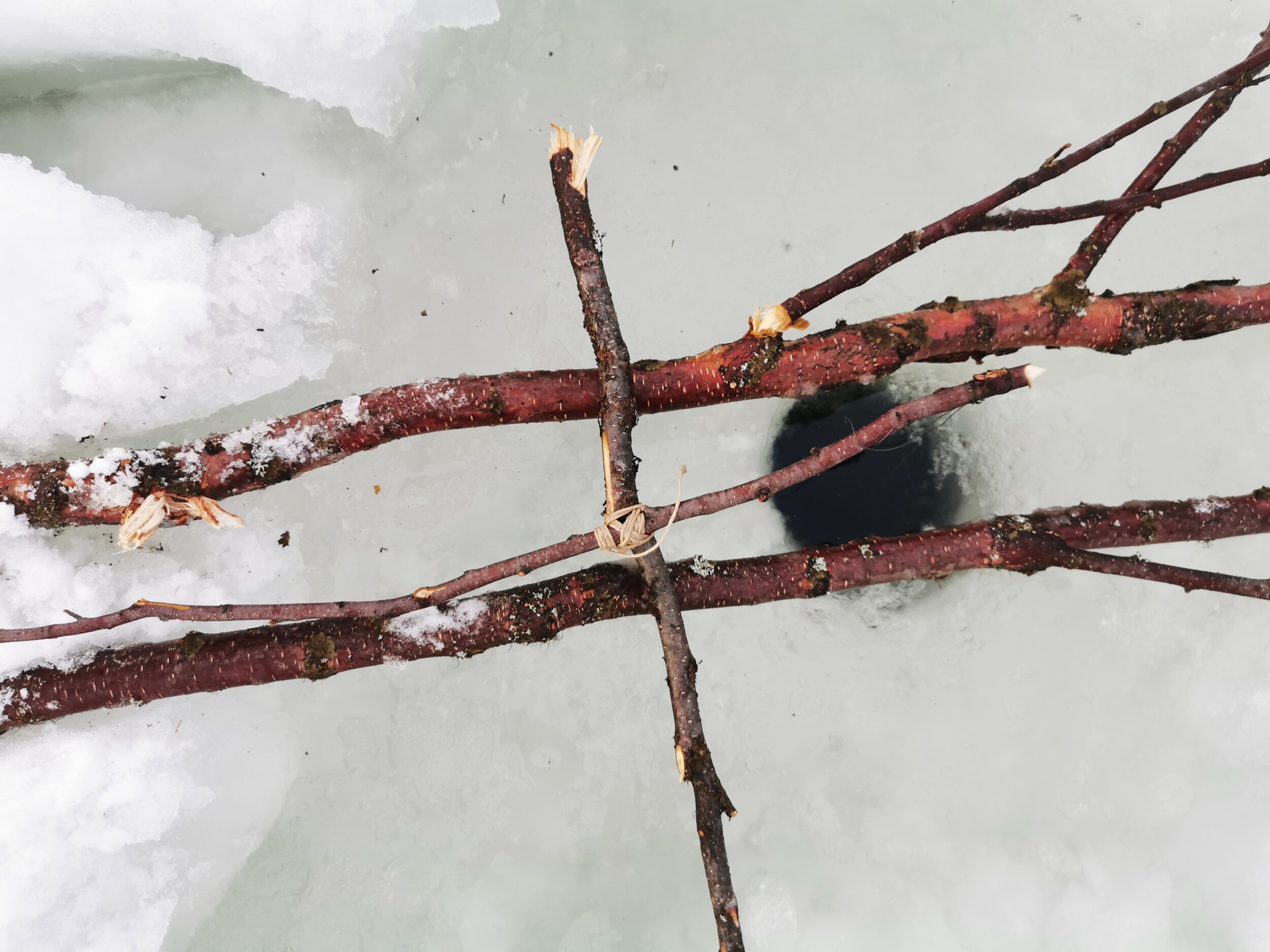
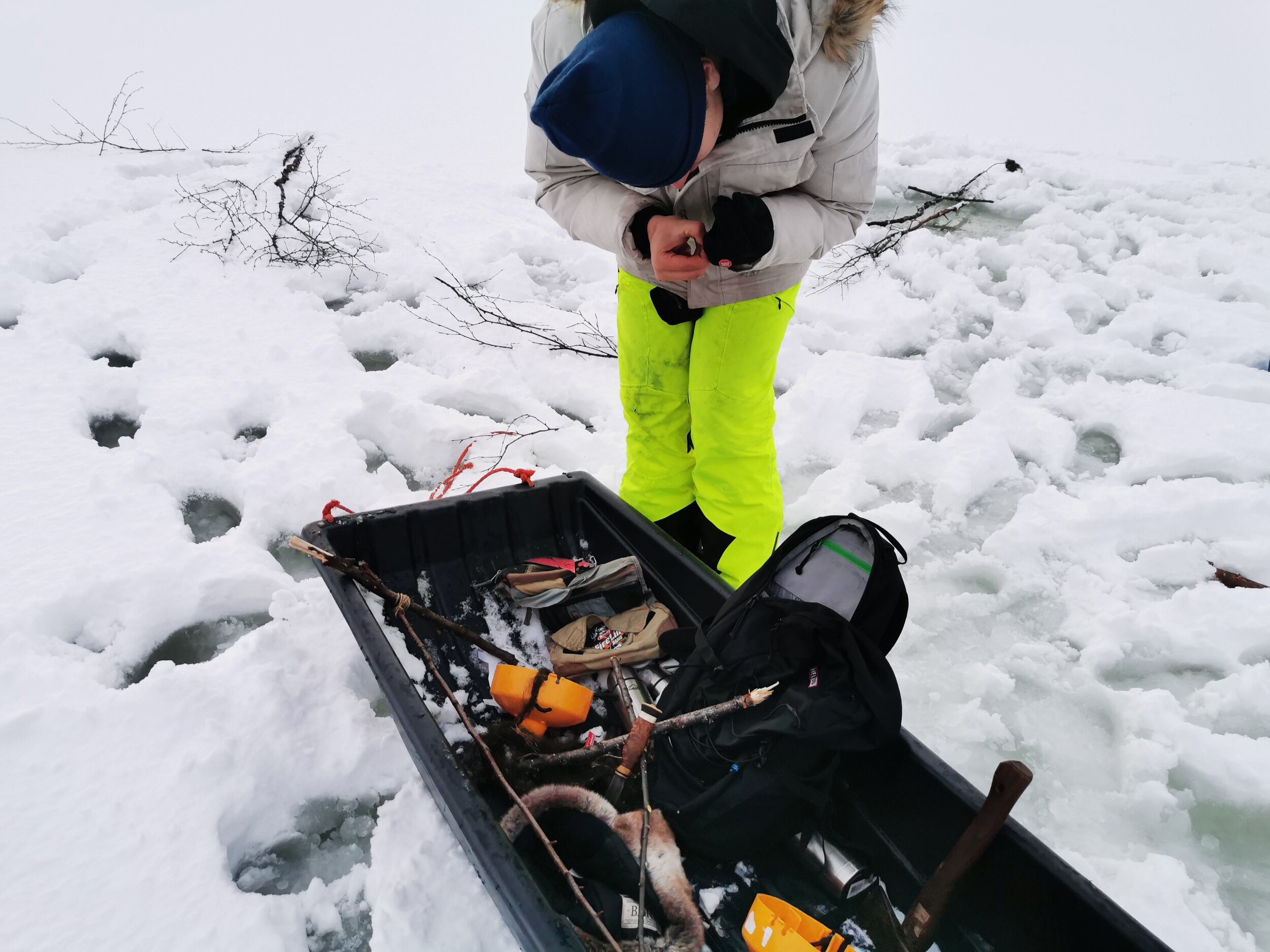
You cut through lake ice and practise primitive ice-fishing techniques using simple methods rather than relying on modern fishing equipment.
You learn how trapping systems work and build traps for practice without killing animals.
Winter tracking is also introduced: reading footprints and other signs, understanding basic animal behaviour and learning how wildlife moves and finds food during the cold season.
The limited edible plants and natural food resources available during Arctic winter are also explored.
Winter Navigation with Map & Compass
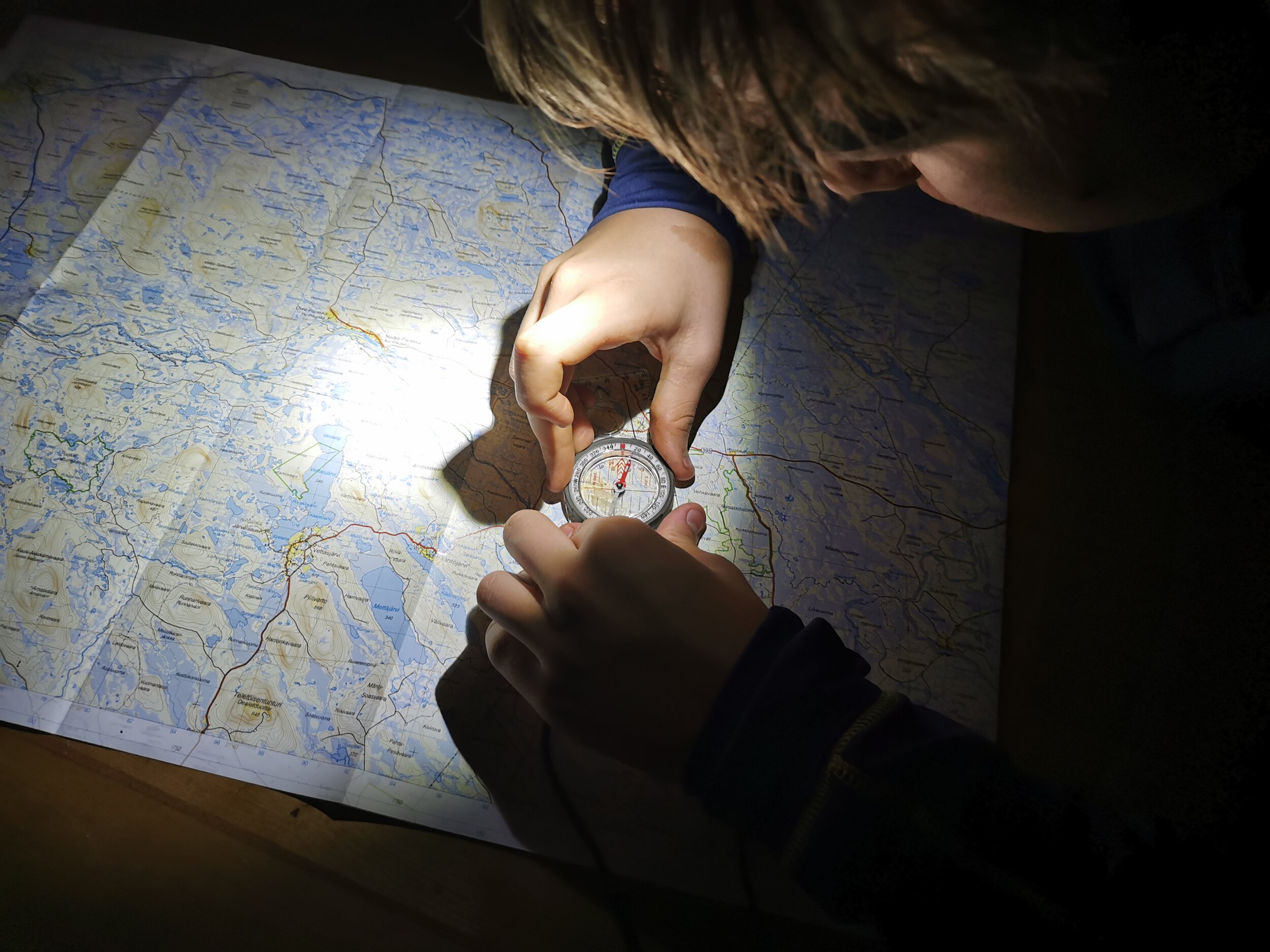
You learn to navigate through snow-covered wilderness using a map, compass, terrain and natural information.
Later in the course, these skills are put into practice during a long and physically demanding navigation exercise through snowy woodland.
Moving for hours through deep snow gives you a very different understanding of distance, energy consumption and the effort required to travel through winter wilderness.
Snowshoes & Traditional Snowshoe Making
Modern snowshoes are provided for travelling through deep snow, but you also learn how traditional snowshoes can be fashioned from basic materials.
Whenever time and course progression allow, you begin crafting your own snowshoes and learn how their construction distributes body weight across the snow.
Completion cannot always be guaranteed, but the techniques and principles behind making them form part of the training.
Reading Snow, Ice & Winter Terrain
You learn to read the landscape rather than simply move through it.
Training covers snow conditions, ice formation on lakes and rivers, recognising weak or changing ice, testing conditions, choosing appropriate crossing points and practical techniques for moving across frozen waterways.
You also learn the fundamentals of avalanche formation, terrain and warning signs.
This is not an avalanche or ice-rescue certification. The objective is survival judgment: understanding the signs around you and recognising when terrain or ice conditions are telling you not to continue.
Camp Life & Winter Friluftsliv
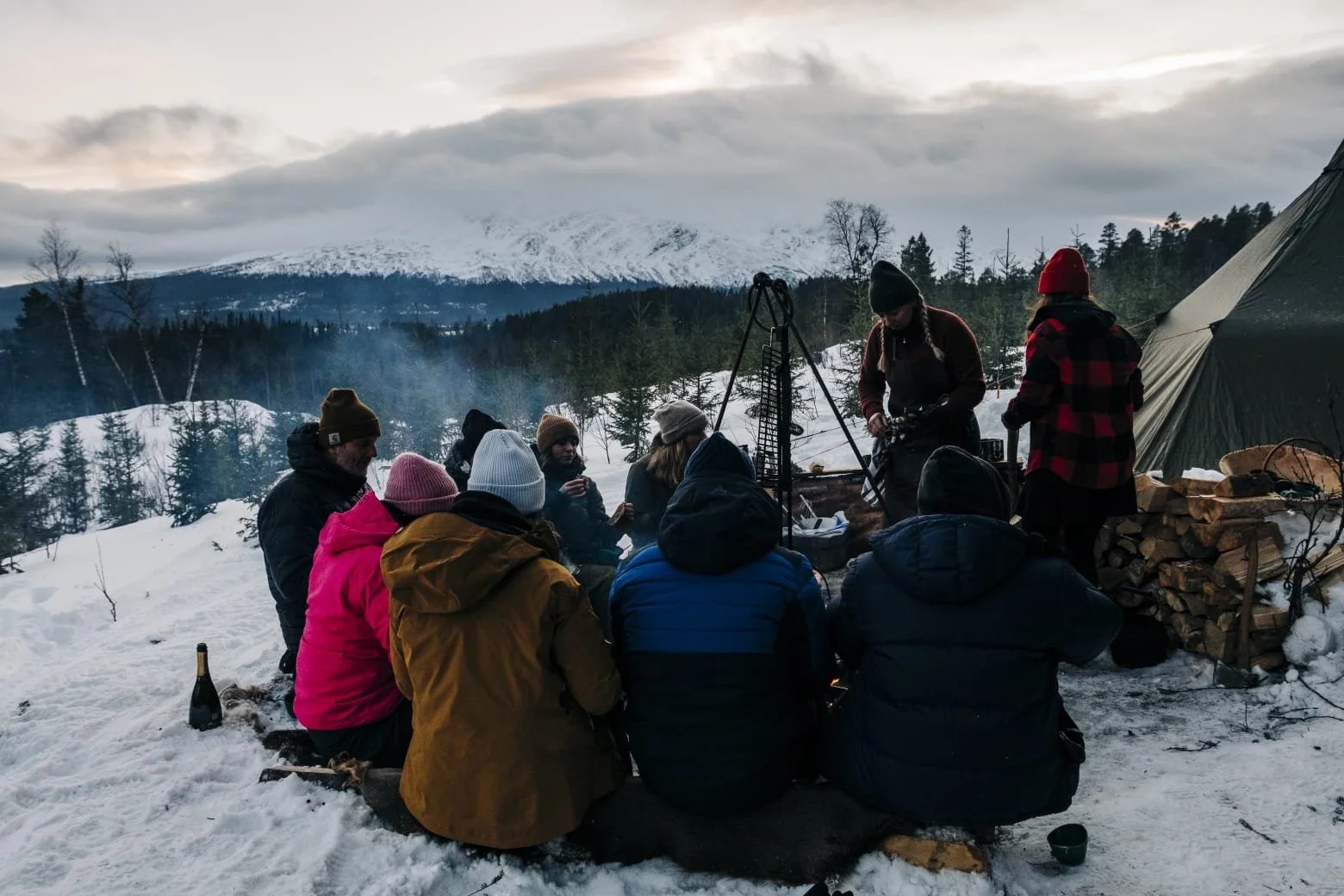
As your skills develop, you increasingly use them around your own winter base.
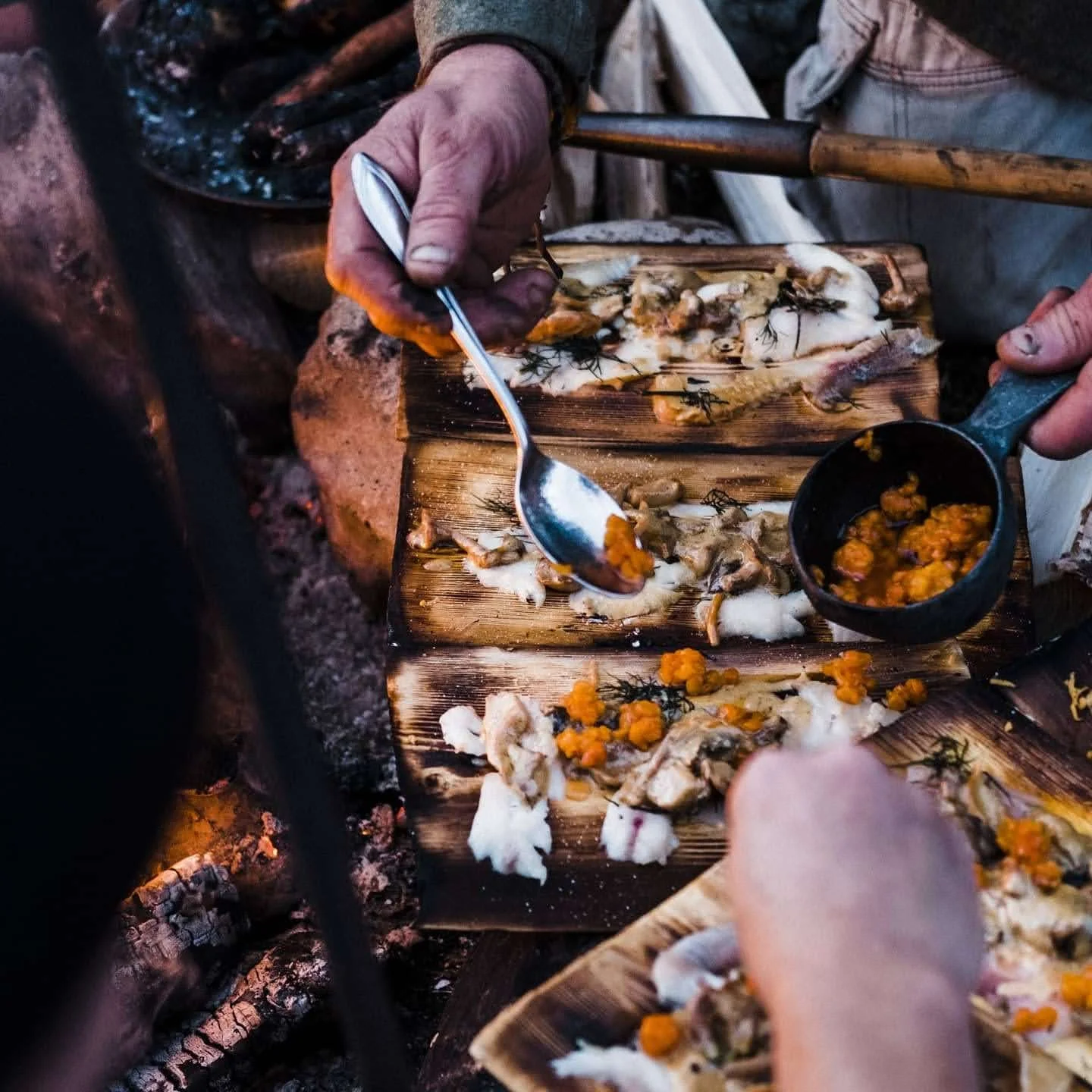
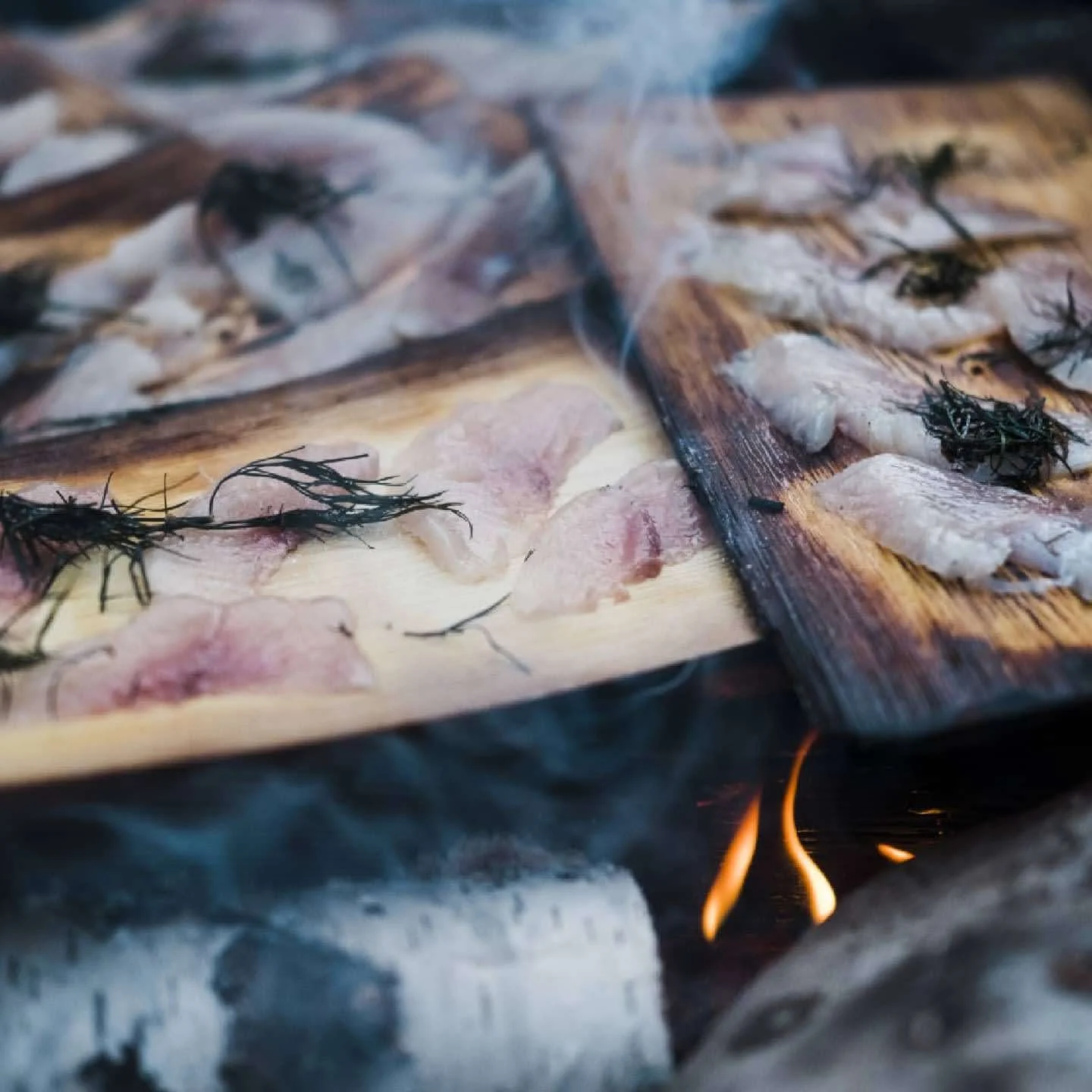
You manage fire, water and shelter, prepare fresh food over open fire and organise your equipment and routines to function efficiently in the cold.
The goal is not simply to know individual winter survival techniques, but to understand how they work together when you actually have to live outside.
-
This Arctic winter survival course is designed for people who want to experience winter wilderness properly — and learn the skills to function in it.
It is suitable for:
Complete beginners with no previous survival training
Bushcraft and outdoor enthusiasts wanting to develop winter-specific skills
Hikers and adventurers preparing for colder environments
People interested in primitive and traditional survival techniques
Anyone looking for an intense, hands-on wilderness experience in Swedish Lapland
No previous survival or bushcraft course is required. Everything is explained, demonstrated and practised during the course.
You should, however, have normal physical fitness and be prepared to work, walk and live outdoors for several days in deep snow and temperatures that can reach -25°C or below.
-
This is not a Lapland sightseeing holiday with a few survival activities added. The course involves cold, physical work, long periods outdoors and demanding movement through snow. You will be expected to participate, practise and get your hands dirty.
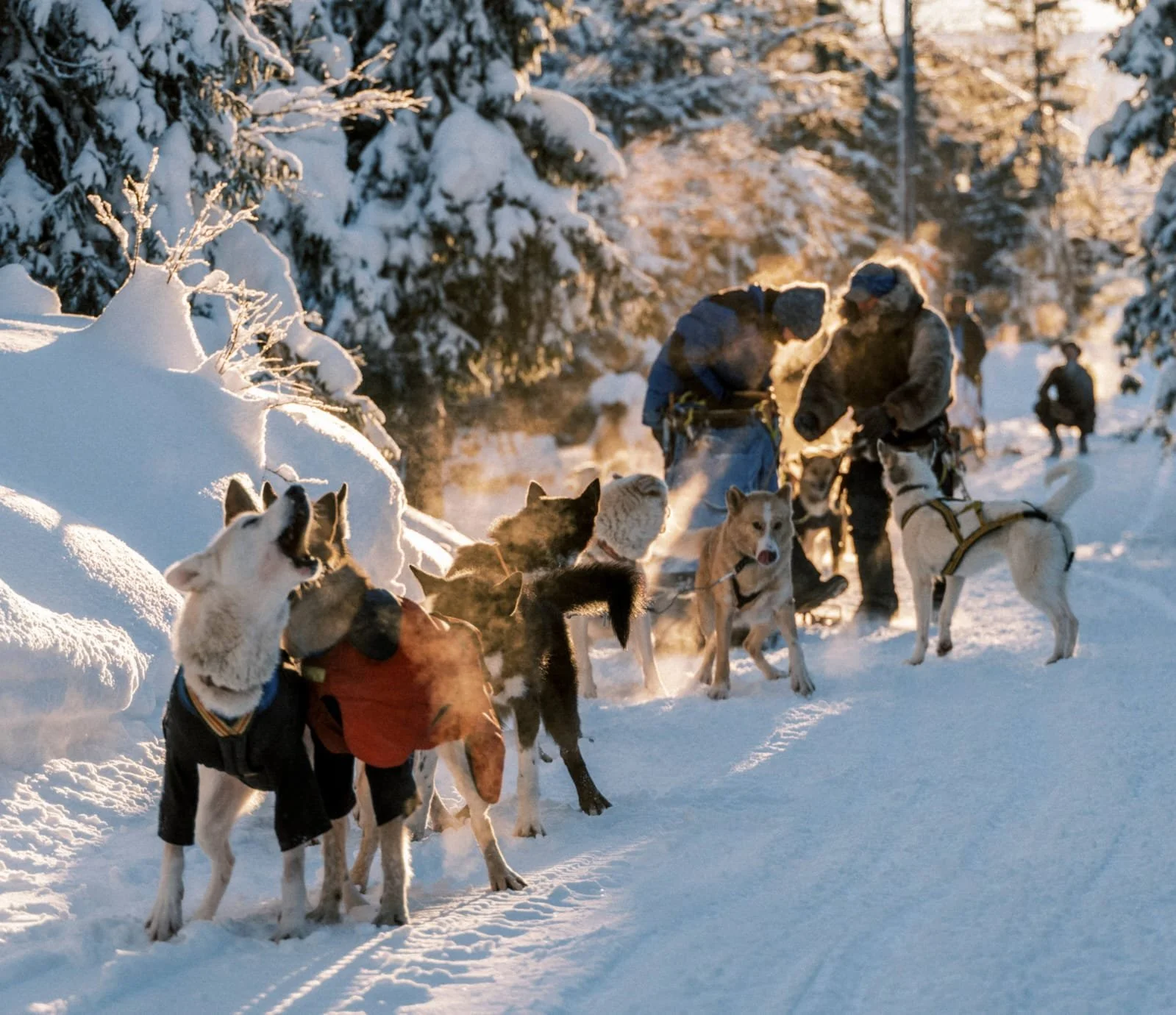
It is not designed for people looking primarily for comfort, organised sightseeing or activities such as dog sledding and snowmobiling. If you want to experience those while you are in Lapland, you can extend your stay around Kiruna, and we are happy to help you find additional activities before or after the course.
If you are looking for a less demanding introduction to wilderness skills, explore our 2-Day Bushcraft & Survival Course near Stockholm.
-
Prepare for temperatures around -25°C, with colder conditions possible. You will need proper winter clothing and sleeping equipment, and a detailed equipment list is provided before departure.
Expedition sleeping bags and mats, extreme-cold boots and winter overalls are available to rent. You should preferably bring a large backpack and smaller daypack, although a backpack can be provided if needed.
All technical course equipment and tools are provided, and all meals are included.
The course is based around a remote wood-heated log cabin with beds, which remains available as a warm and safe backup throughout the course.
The exact wilderness base may vary between departures, but courses take place in Norrbotten, Swedish Lapland. Pickup and return transport in the Kiruna area are included, with the exact meeting point arranged before departure.
-
Extreme cold sleeping bag, not down, synthetic only. (You can rent out a sleeping bag from us)
Winter cold insulated boots
Wool socks
Expedition clothes (extreme cold)
Headlamp with batteries
Warm sweater for the evening/night
Change of clothes, but one or two will do fine.
Hiking trousers. NO jeans.
Underlayer for the night.
Your personal medication if needed.
Knife
Compass
Pen & paper
-
Do I need previous survival or bushcraft experience?
No. The course is open to complete beginners. Each skill is explained, demonstrated and practised during the course. You should, however, have normal physical fitness and be prepared for several demanding days outdoors.
How cold can it get?
You should prepare for temperatures around -25°C. Temperatures can be warmer or colder depending on the weather during your course.
Do I have to sleep in the quinzee?
You are strongly encouraged to sleep in the igloo-style quinzee you build once it is ready, and ideally to spend several nights there.
However, the heated log cabin remains available throughout the course if you need to warm up, recover or sleep inside.
What equipment do I need?
You need suitable winter clothing, a large backpack, a smaller daypack and appropriate sleeping equipment.
Expedition sleeping bags and mats, extreme-cold boots and winter overalls are available to rent. All technical survival equipment and tools are provided.
Will we really go ice fishing?
Yes. You learn how to access the frozen lake and practise primitive ice-fishing techniques using simple equipment.
The actual catch, of course, cannot be guaranteed.
Will we make our own snowshoes?
You learn the principles and techniques of traditional snowshoe making and, when time allows, begin crafting your own from basic materials.
We cannot guarantee that everyone will complete a full pair. Modern snowshoes are provided for travelling during the course.
Will I see the Northern Lights?
Possibly — but nature makes that decision.
The course takes place in Swedish Lapland during the aurora season, giving you a good opportunity to see the Northern Lights when skies and solar activity cooperate. They can never be guaranteed.
Where does the course start?
Pickup and return transport in the Kiruna area are included. The exact meeting point is arranged with you before departure.
Can I join the course alone?
Yes. You do not need to book as part of a group. Scheduled departures require a minimum of three participants and have a maximum group size of eight.